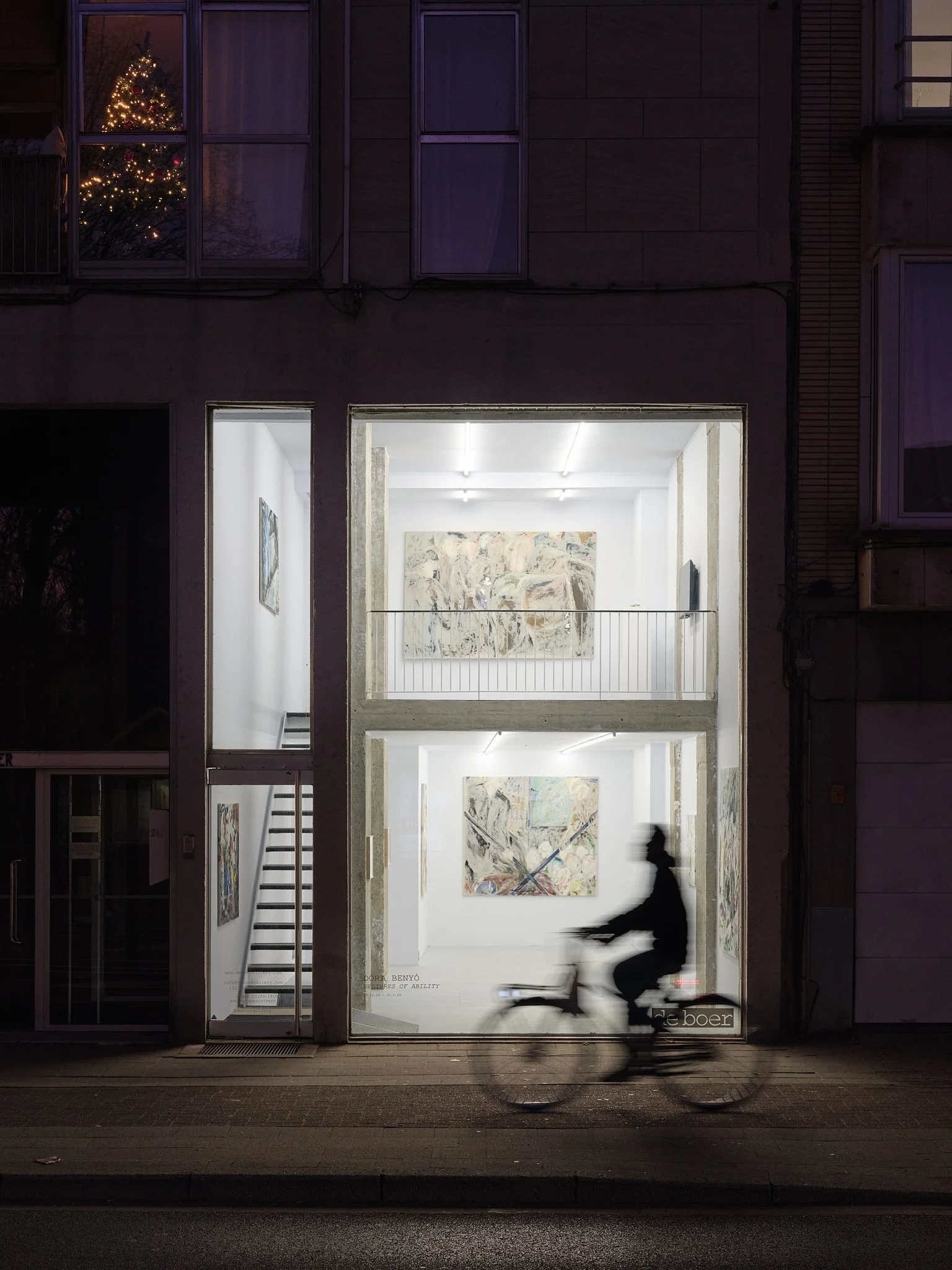
Dóra Benyó
Gestures of Ability
12 December, 2025 – 31 January, 2026
de boer | Antwerp, Belgium
Mechelsestenweeg 247, Antwerpen 2018
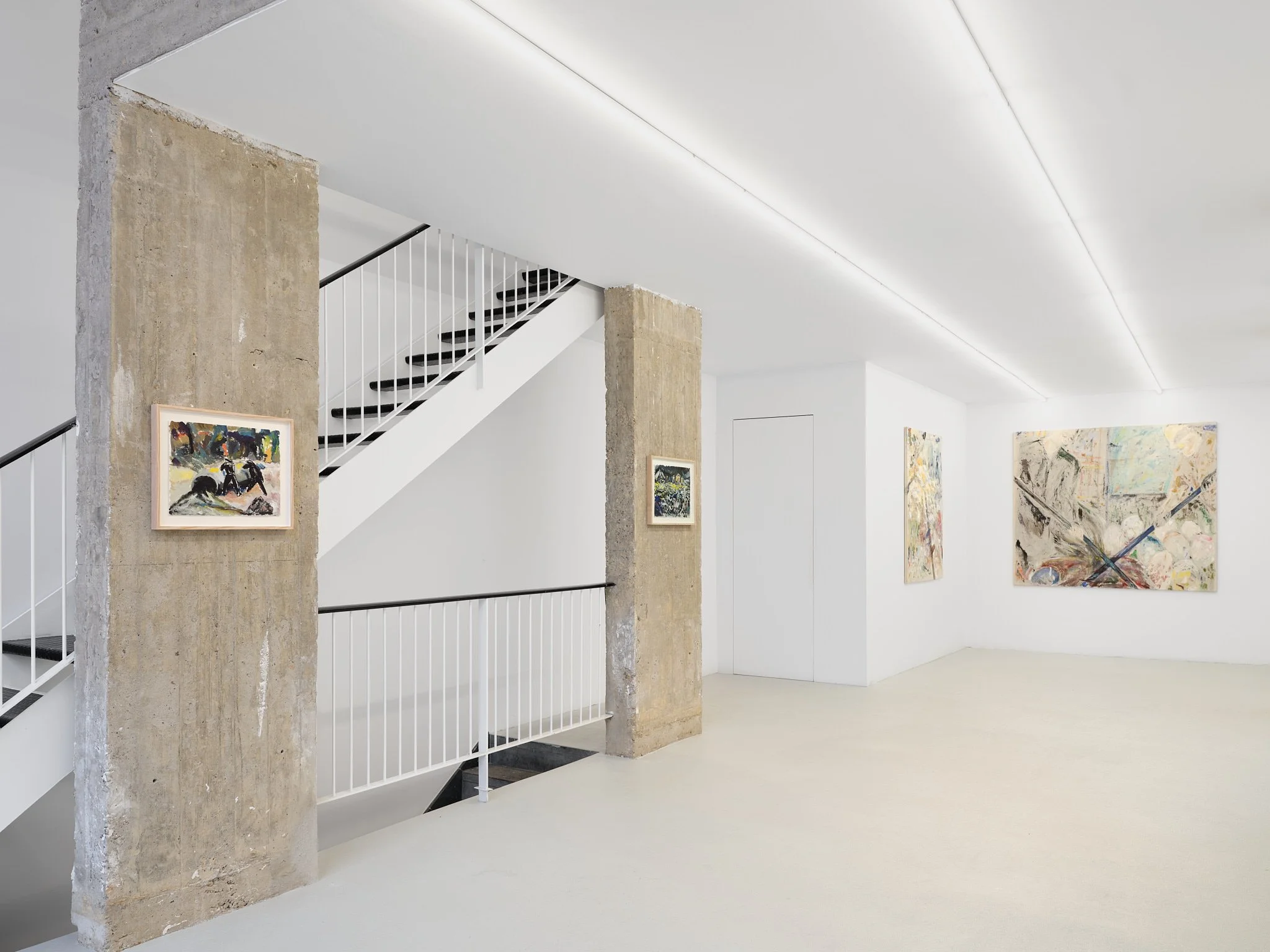
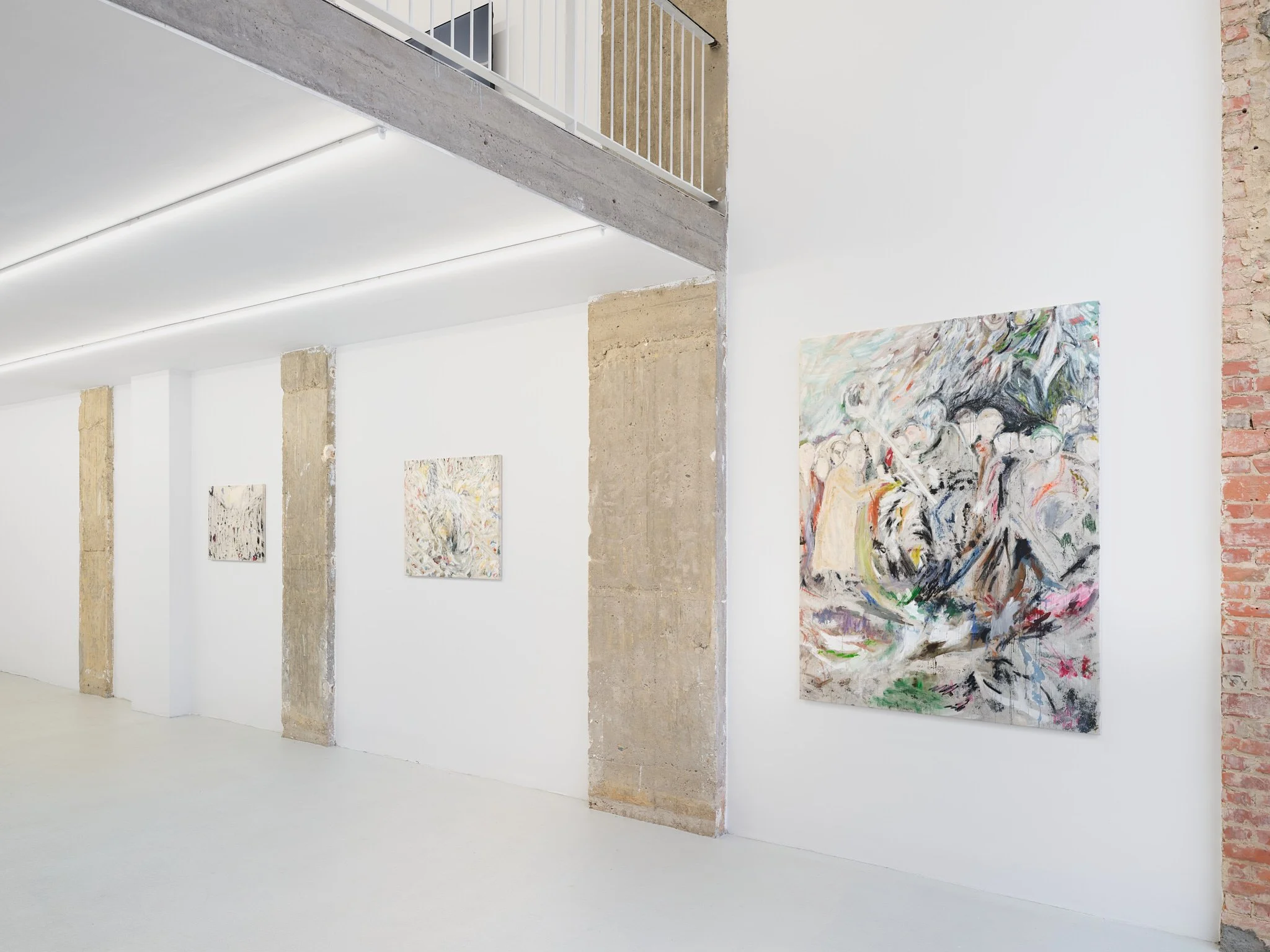
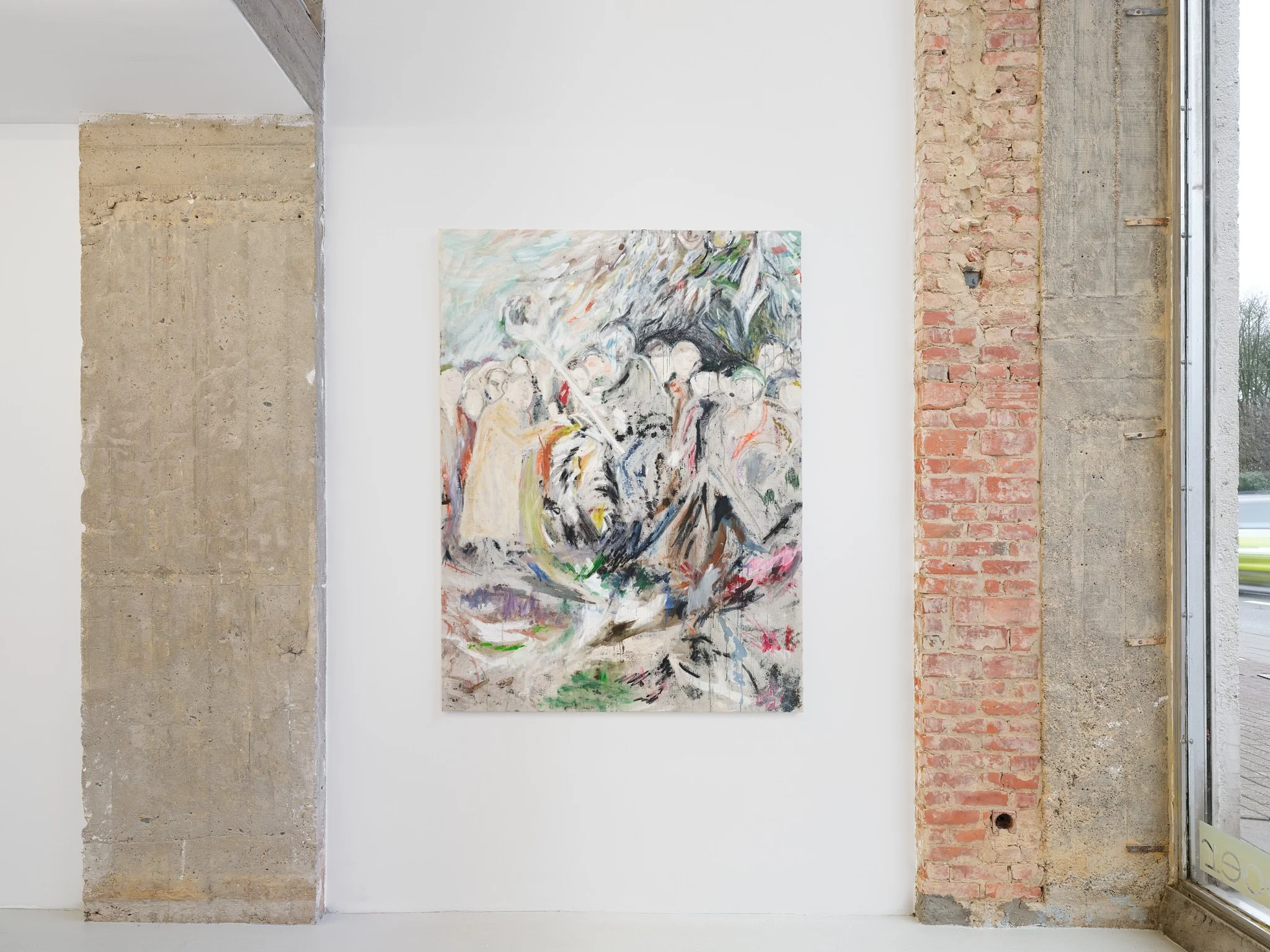
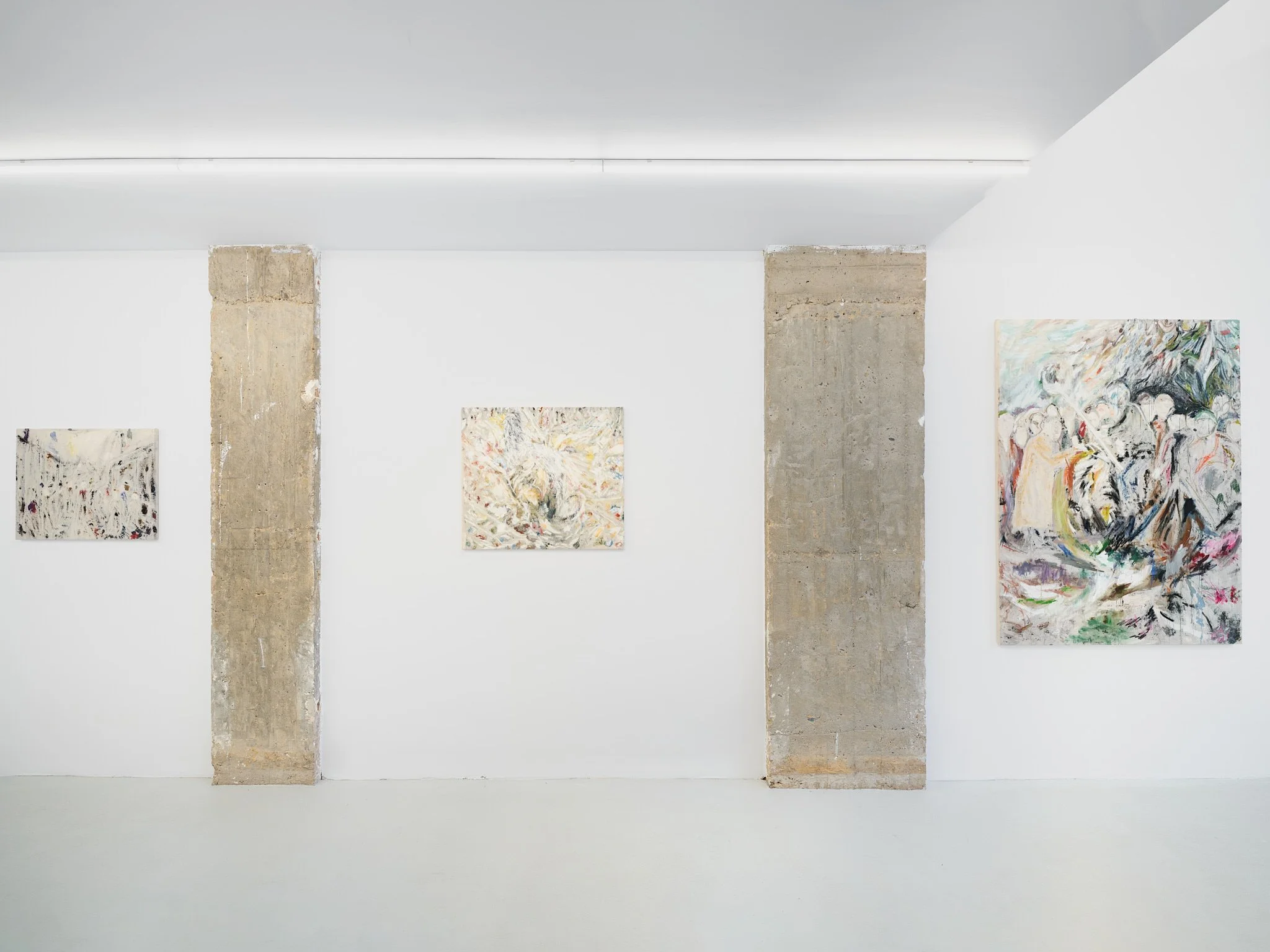
Dóra Benyó
Gestures of Ability
Text by Isa Van den Wouwer
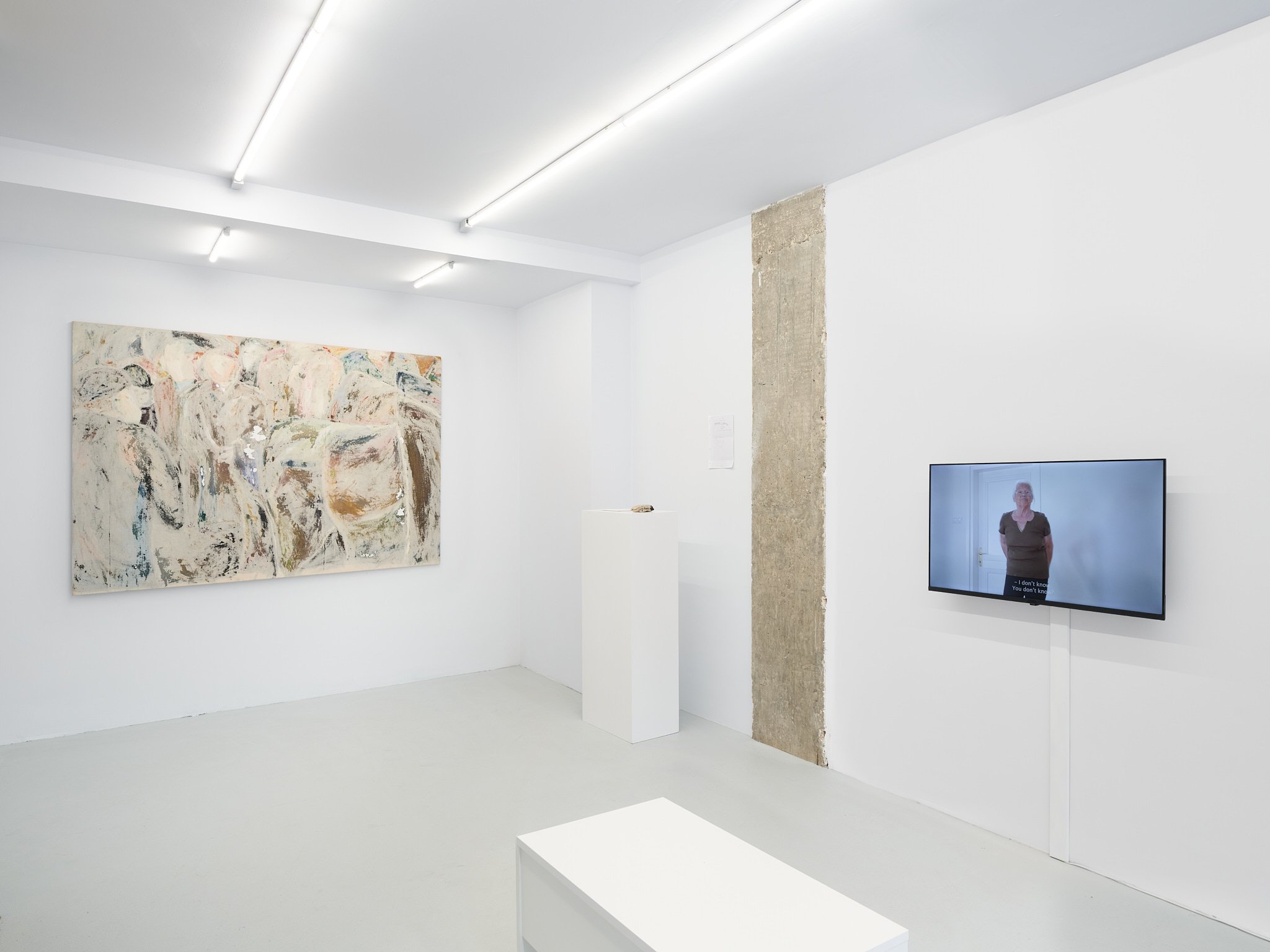
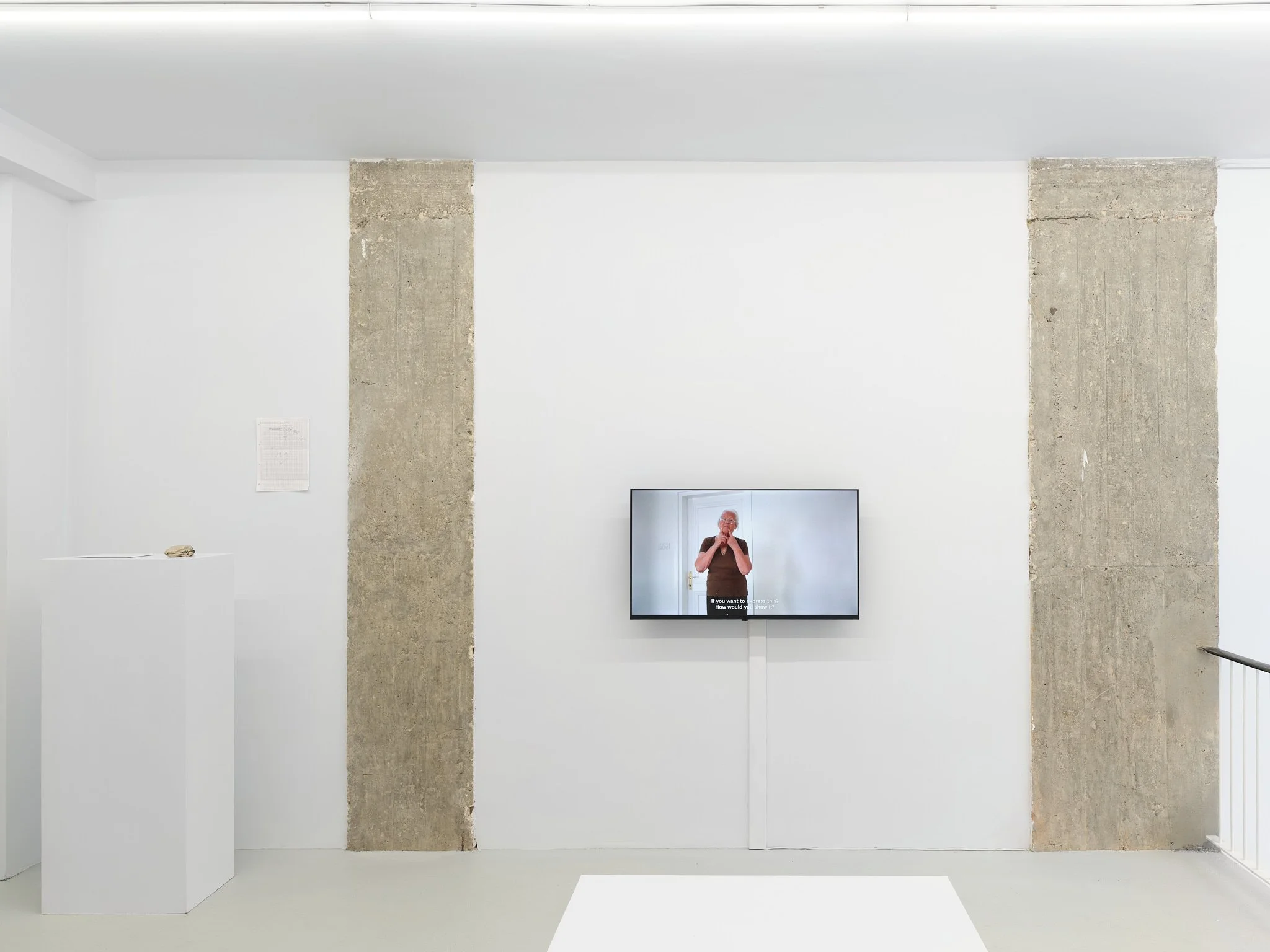
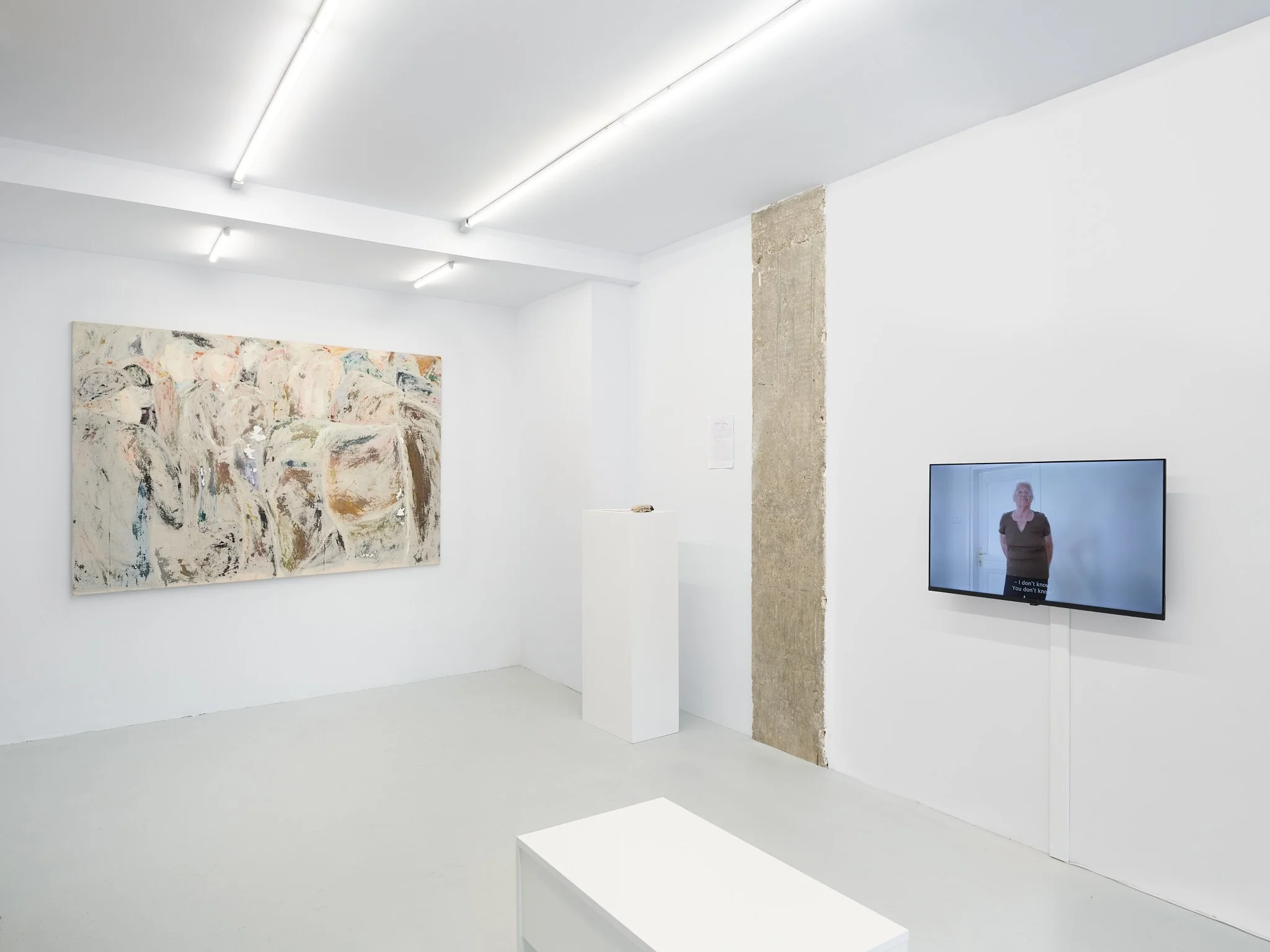
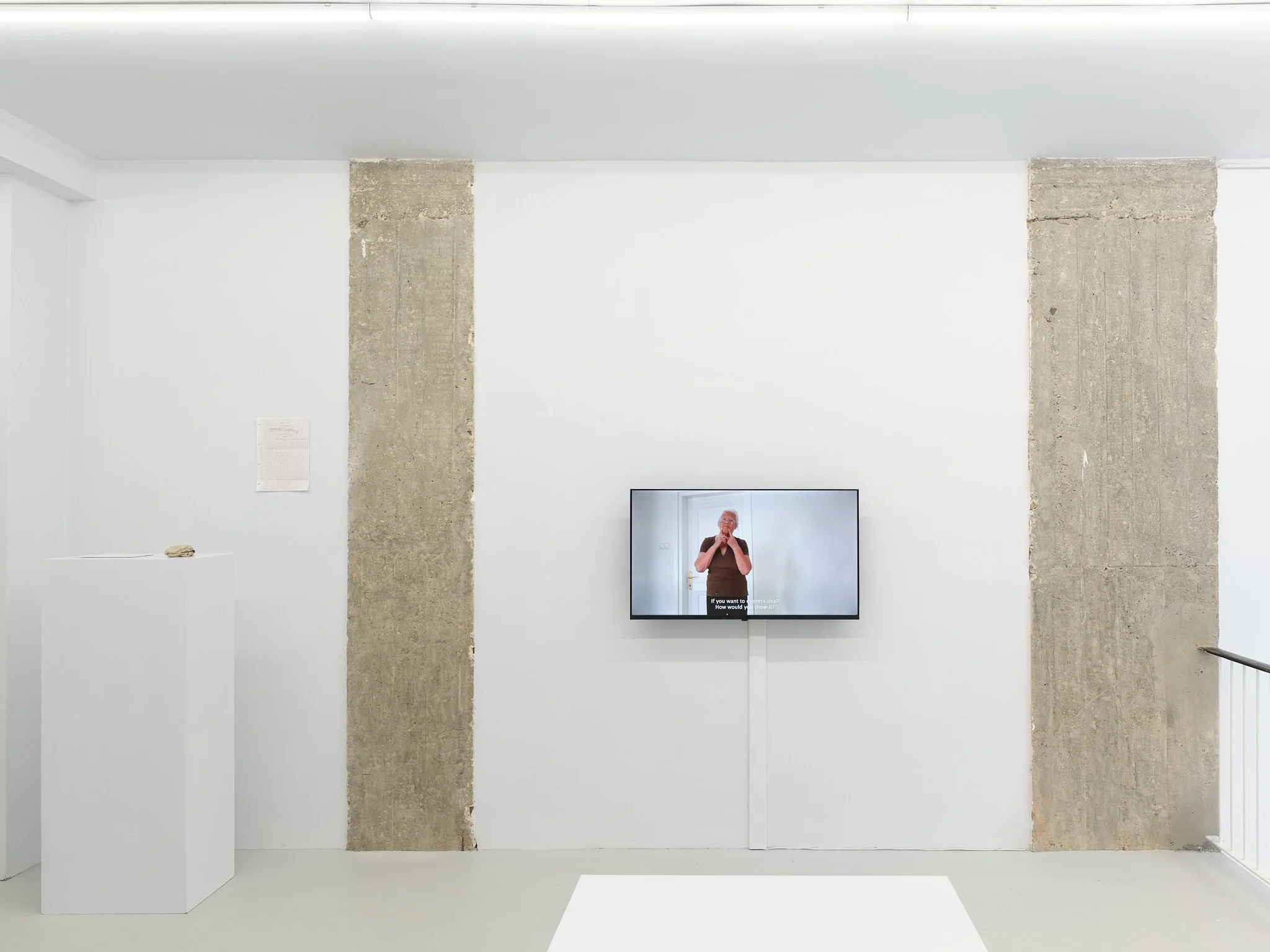
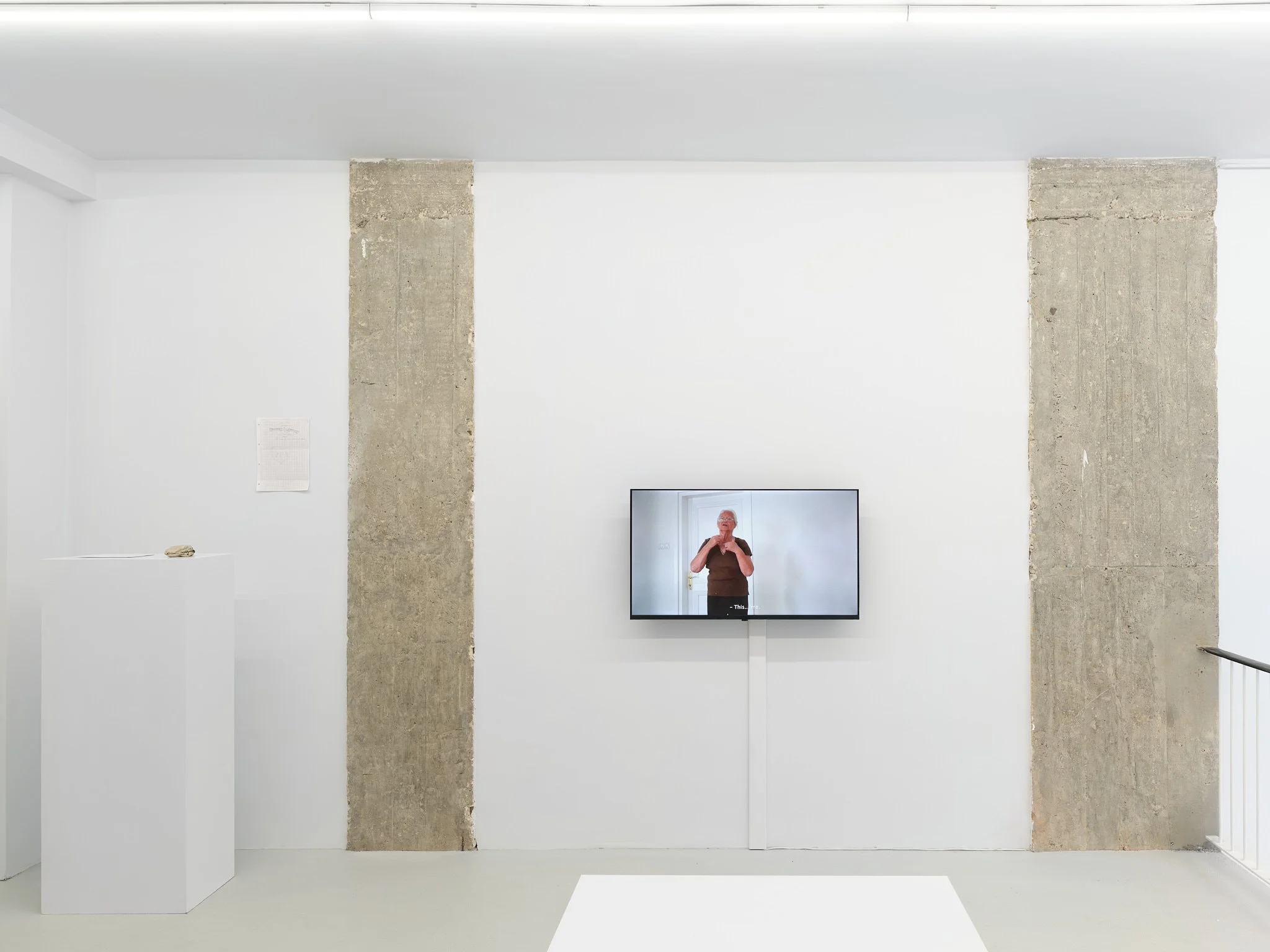
The gentle sound of the video installation Hogyan mutatnád meg – Afázia (How Would You Show – Aphasia) welcomes us to Gestures of Ability, Dóra Benyó’s debut solo presentation at de boer gallery. Serving as the exhibition’s starting point, this work captures Benyó tenderly guiding her grandmother to render words and sentences through specific physical gestures, opening up alternative ways for them to communicate. Tracing through the exhibition, the artist investigates how language comes to be impaired. Shifting across personal and collective spheres, the works respond to her grandmother’s illness, namely aphasia, as well as the wider Communist regime that stripped a society in its entirety of its voice.
Over the past decade, Dóra Benyó (b. 1989, Hungary), living and working between Brussels and The Hague, has developed a body of work encompassing paintings, drawings, performative works, and video installations. Through her practice, she examines the lingering effects of the Communist regime and the tumultuous political climate it produced. While documenting her perspective on this history, she interrogates the subjective nature of memory and what we believe to remember. In this light, Dóra Benyó prompts the urgency of the archive as a means to map the contours of individual and collective histories, positioning it as a guiding principle within her work.
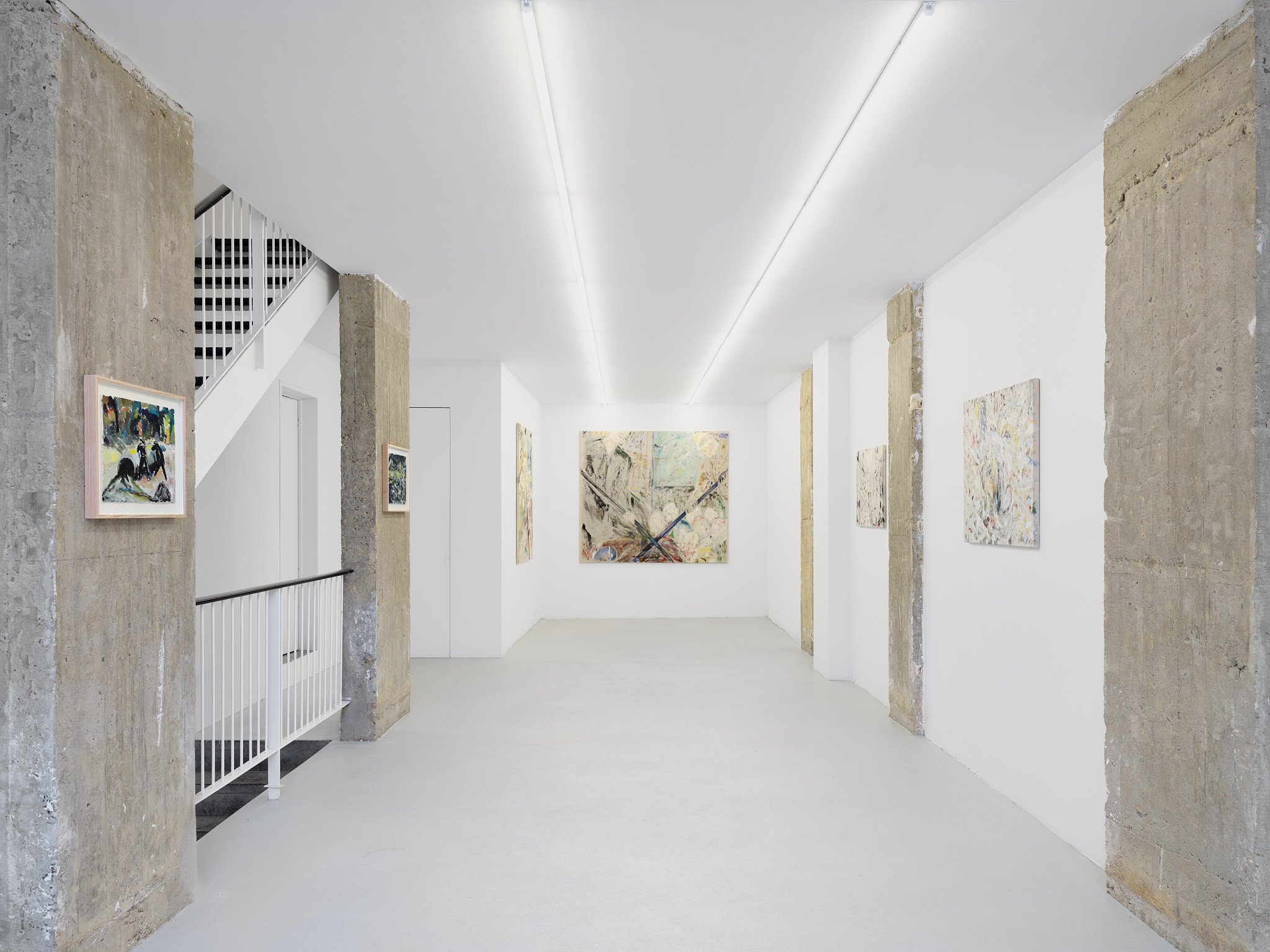
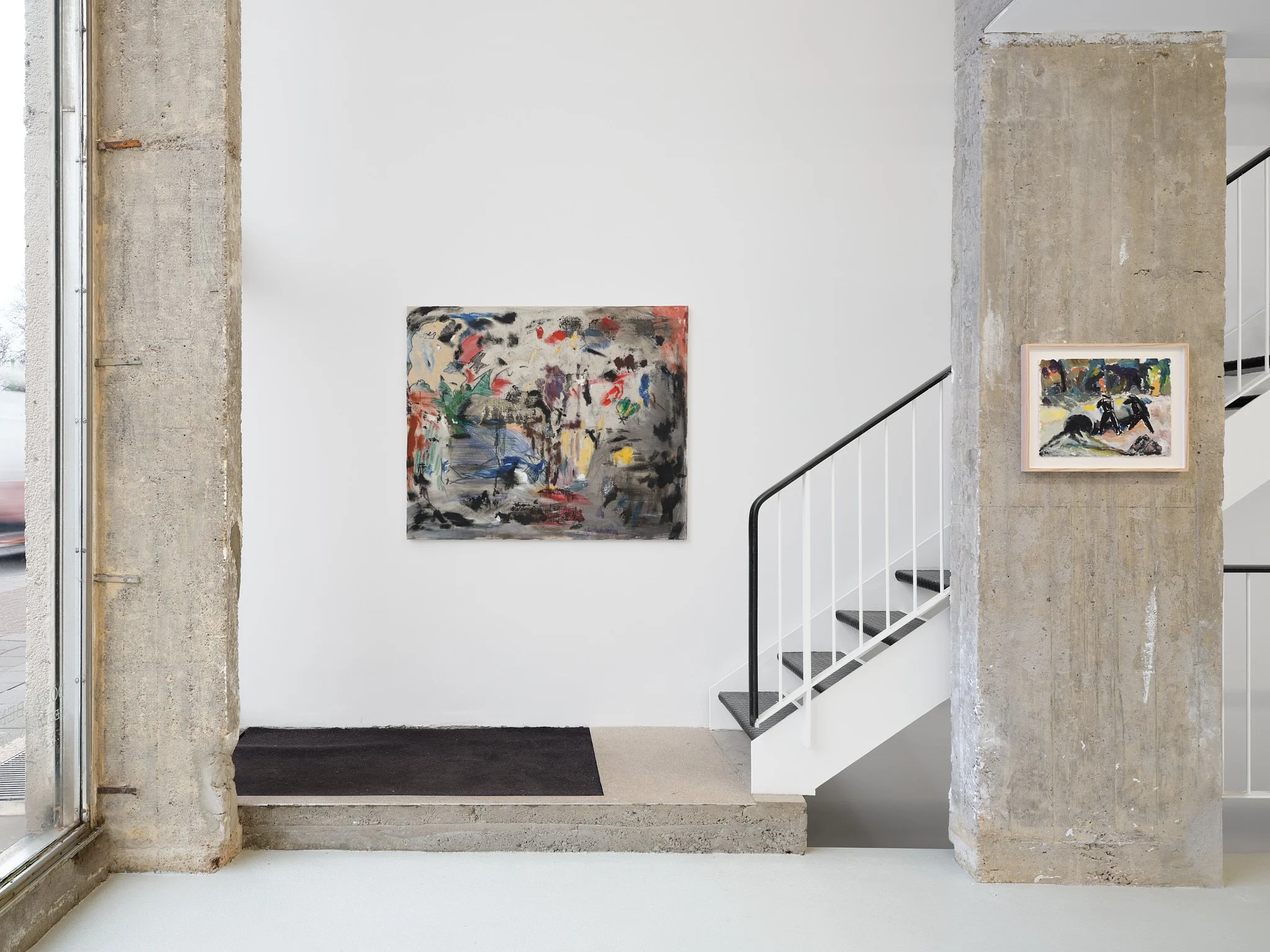
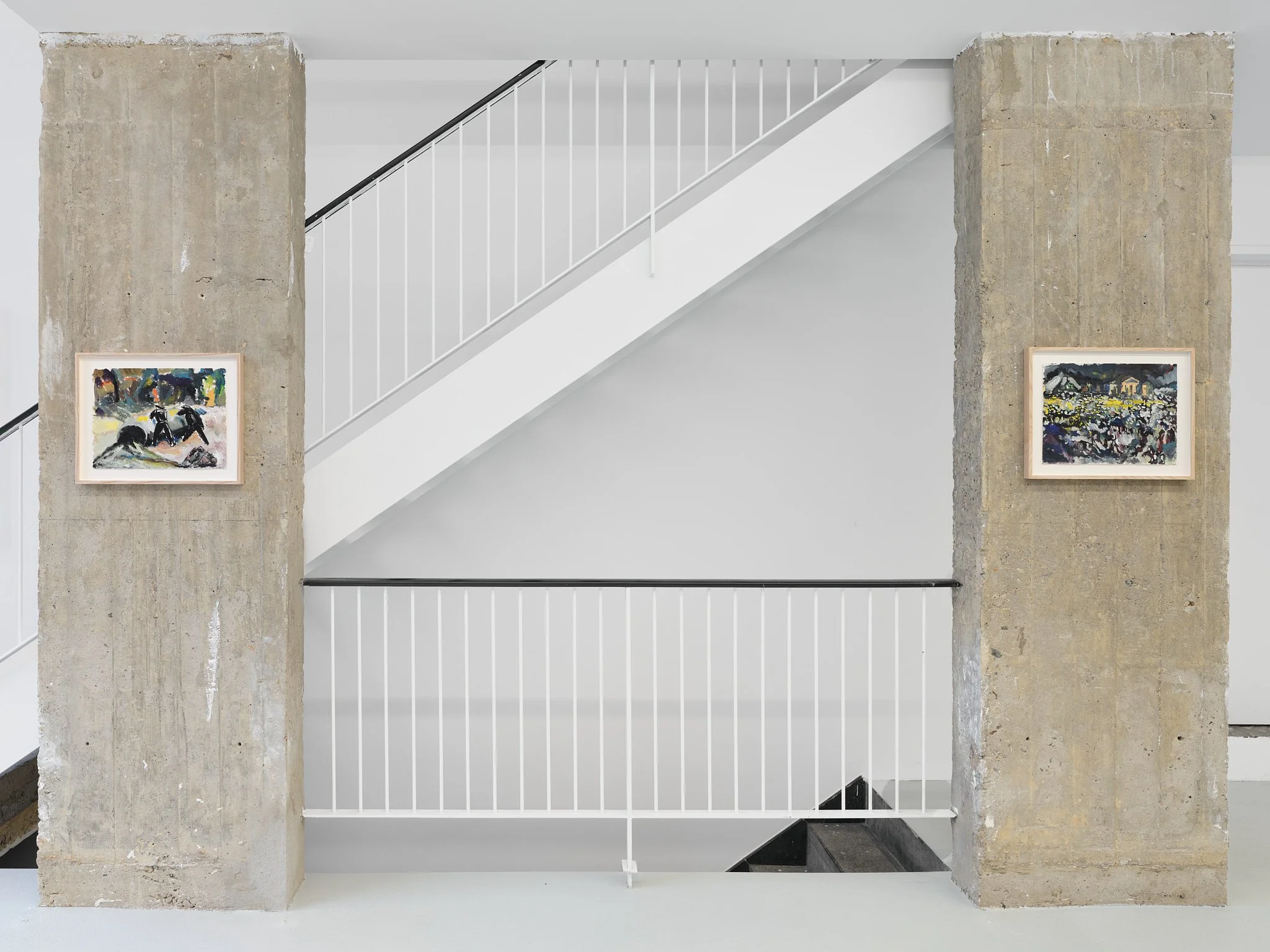
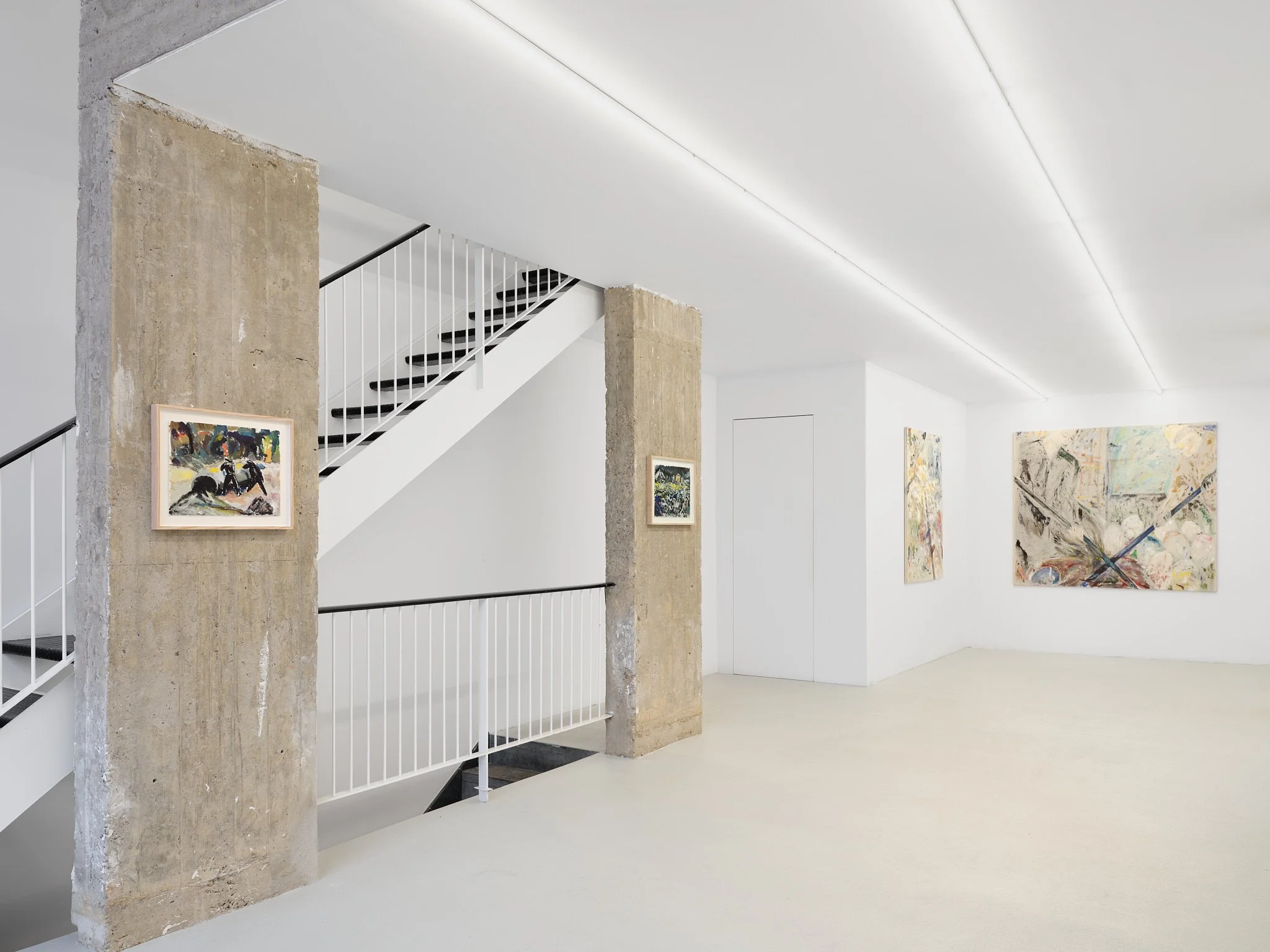
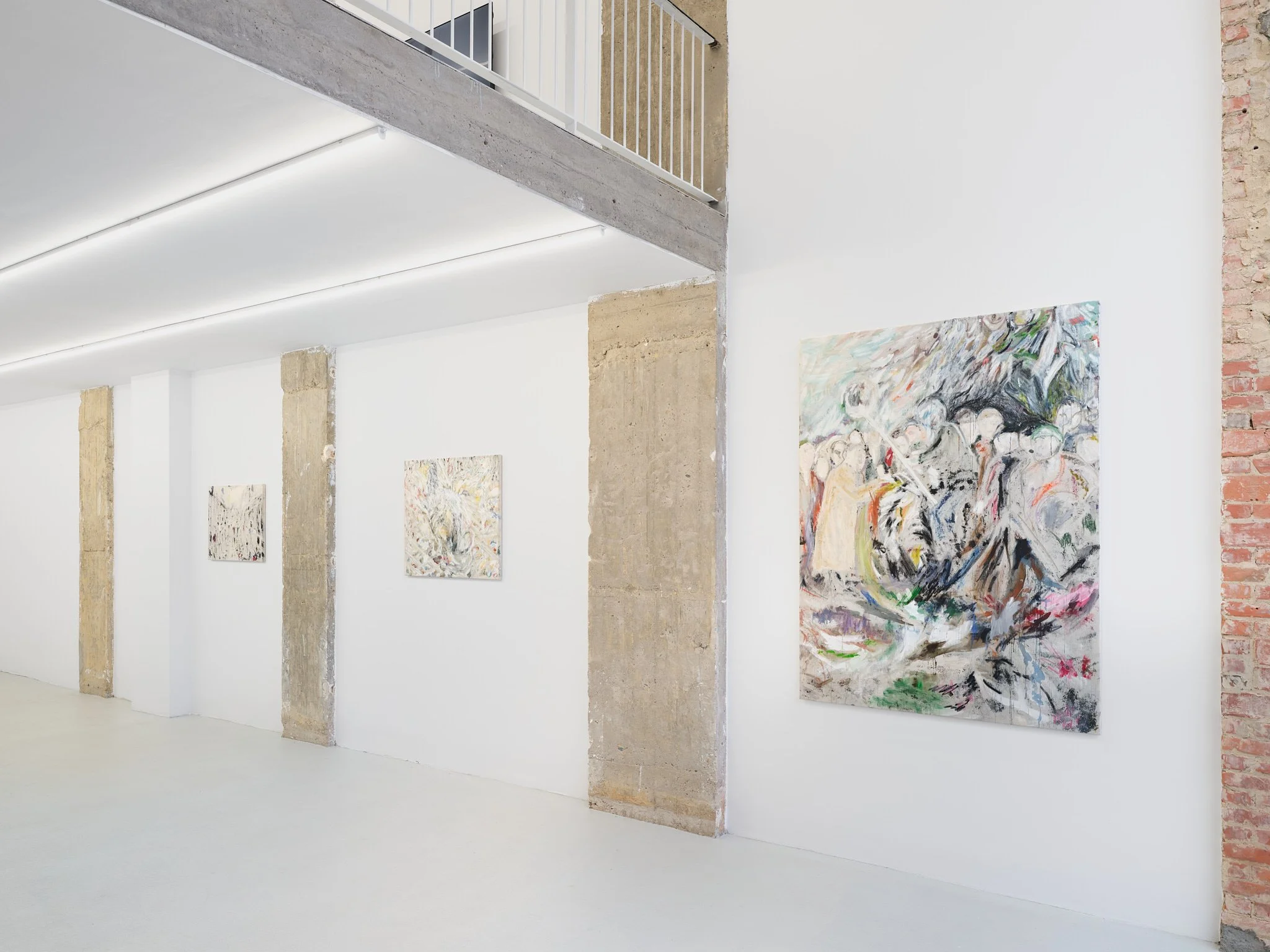
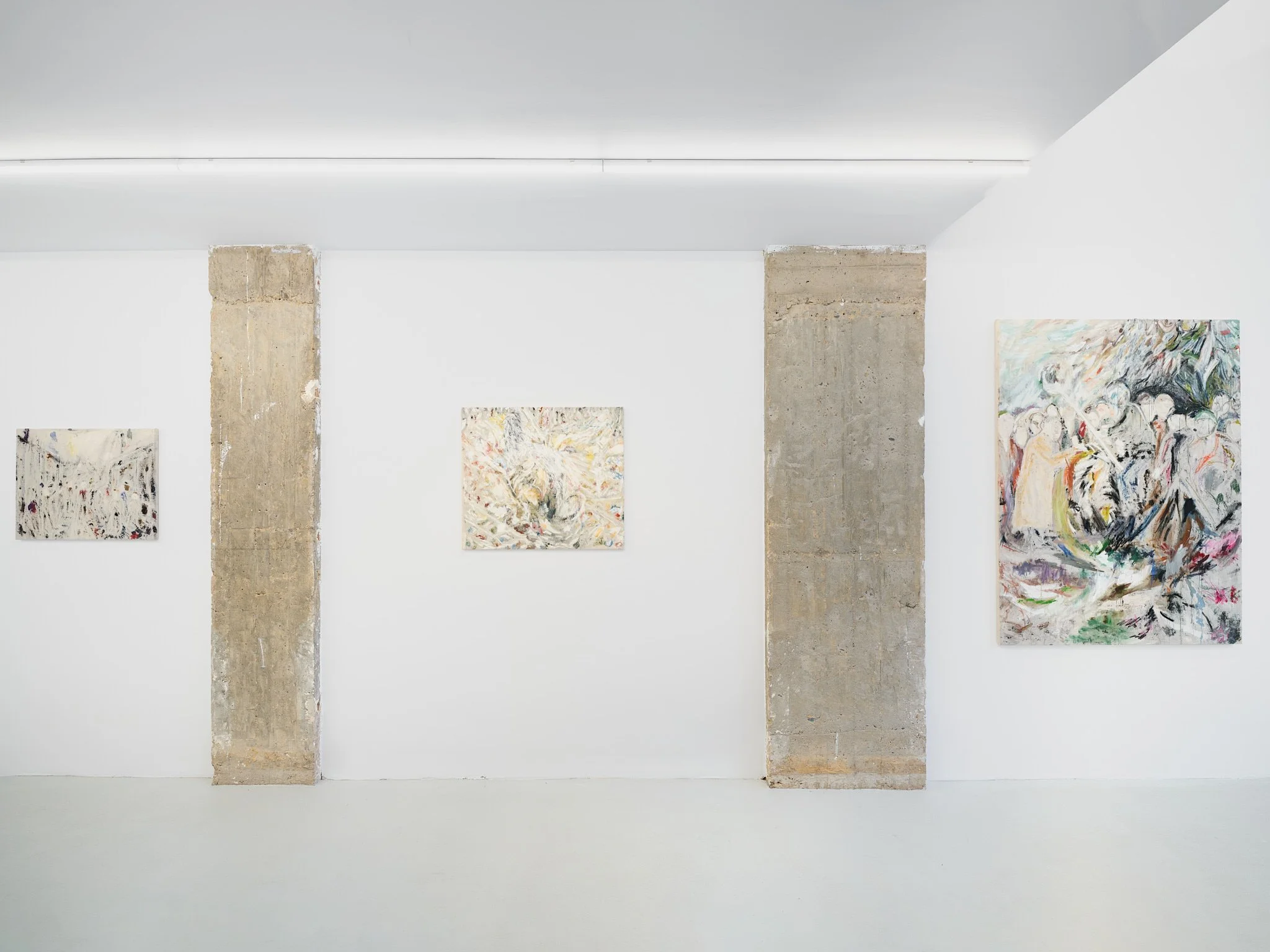
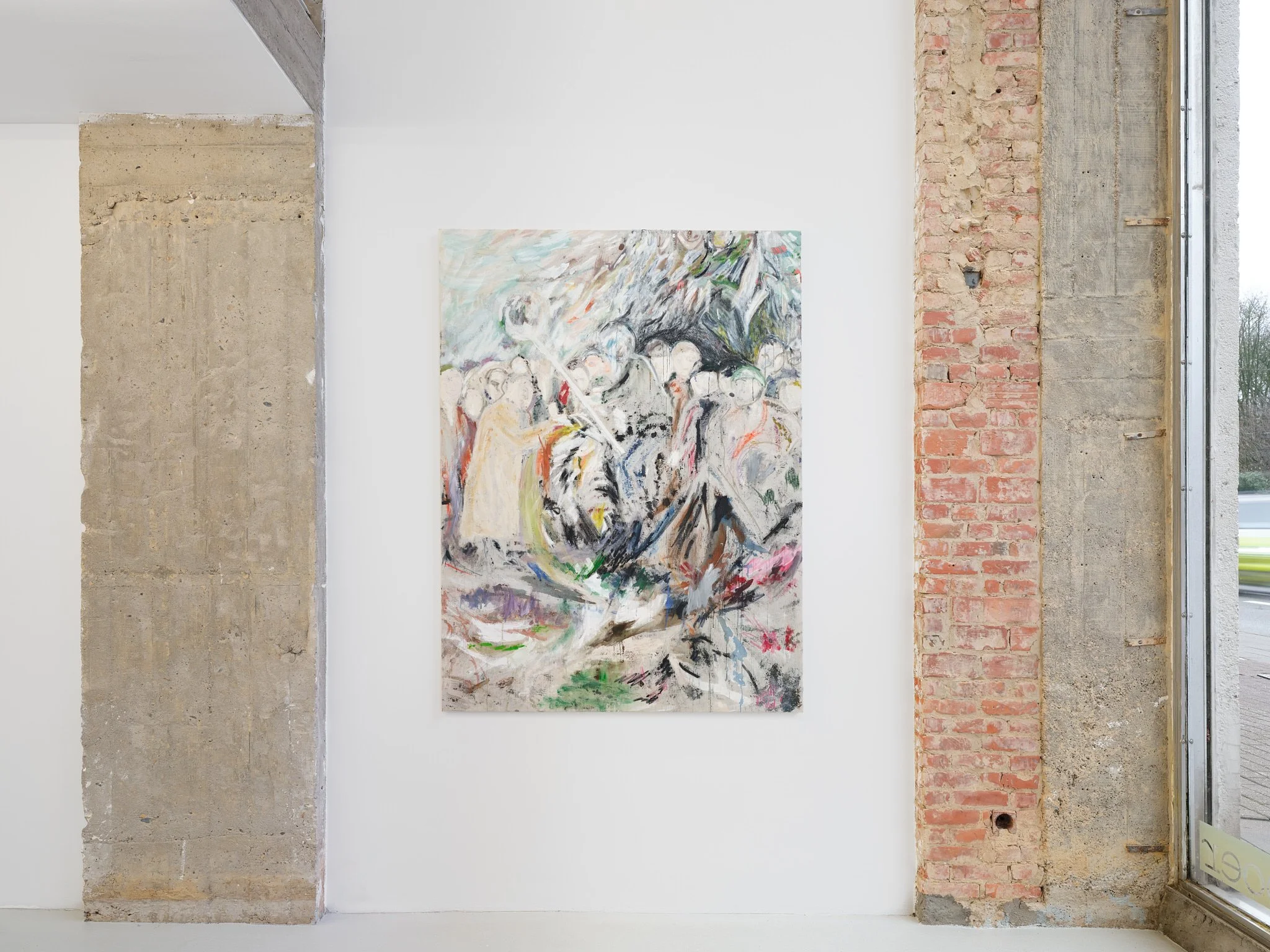
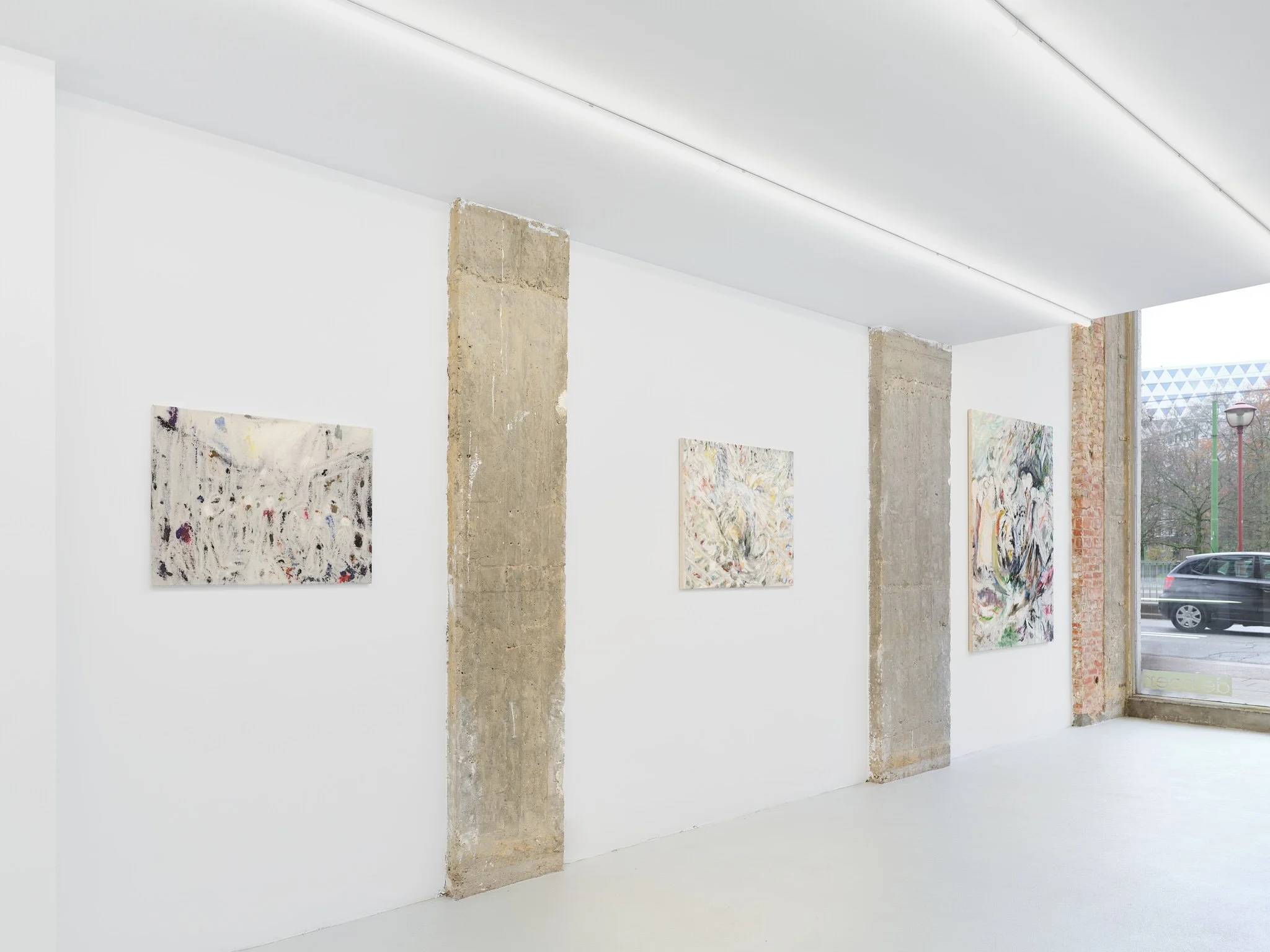
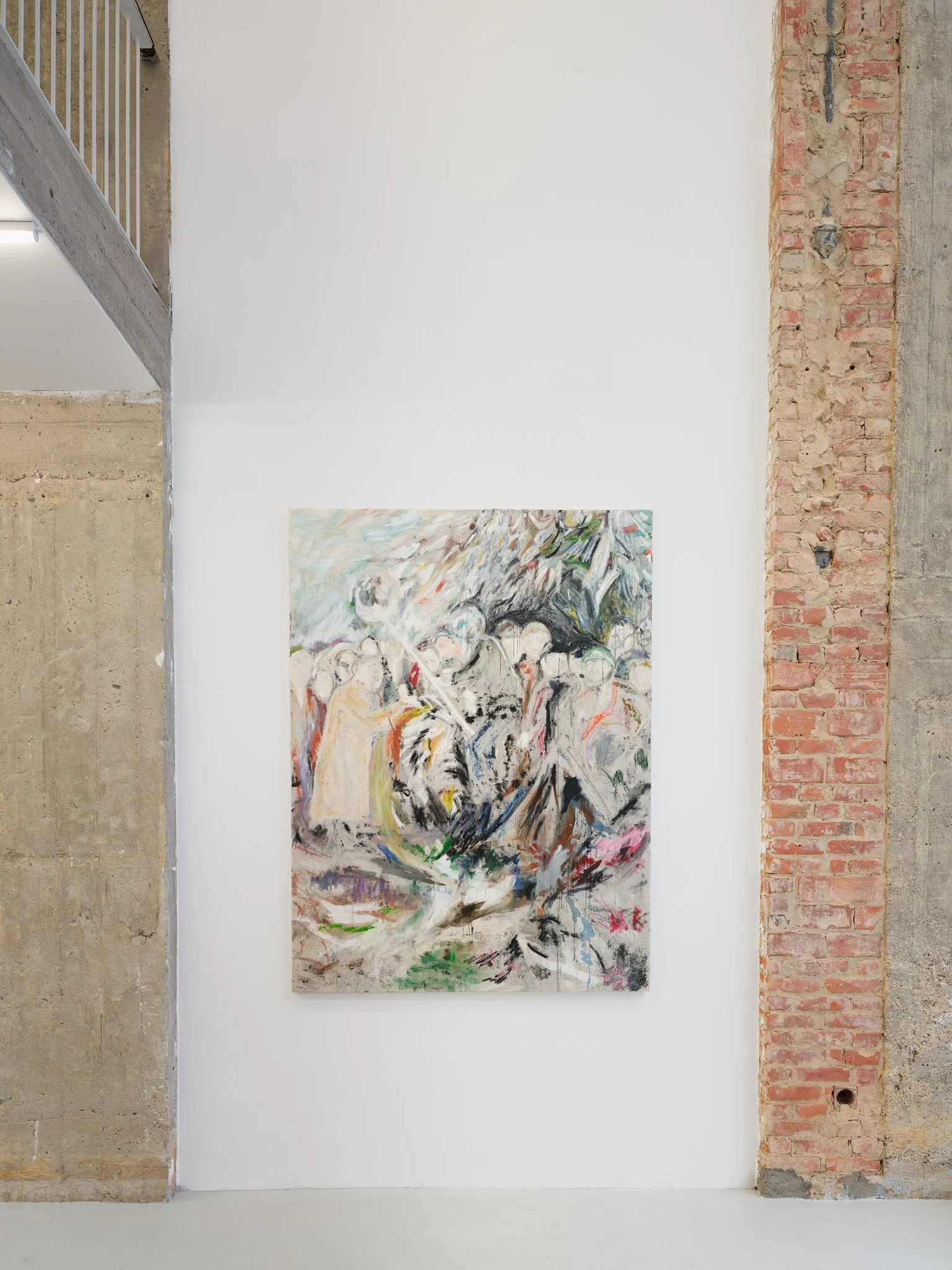
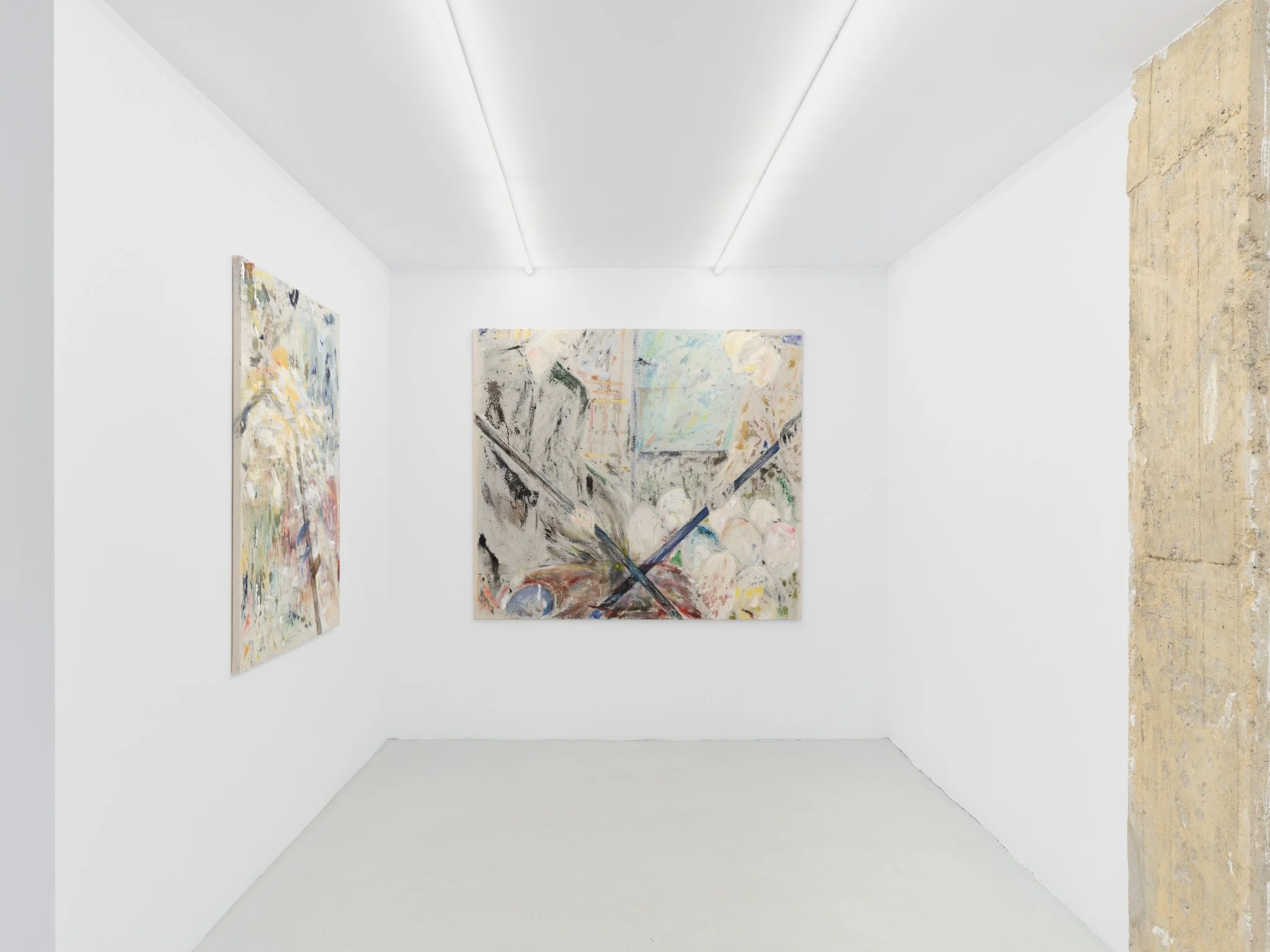
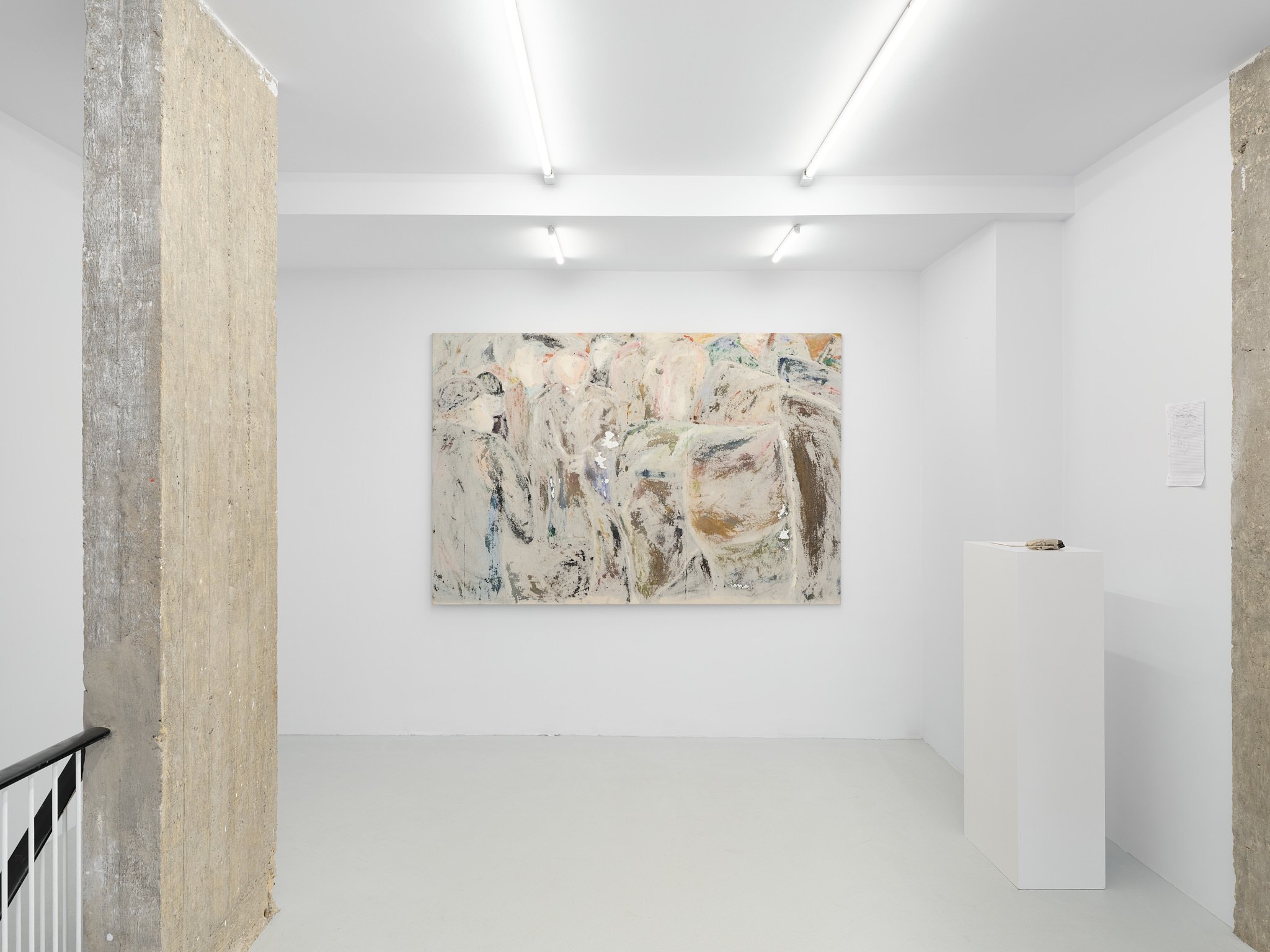
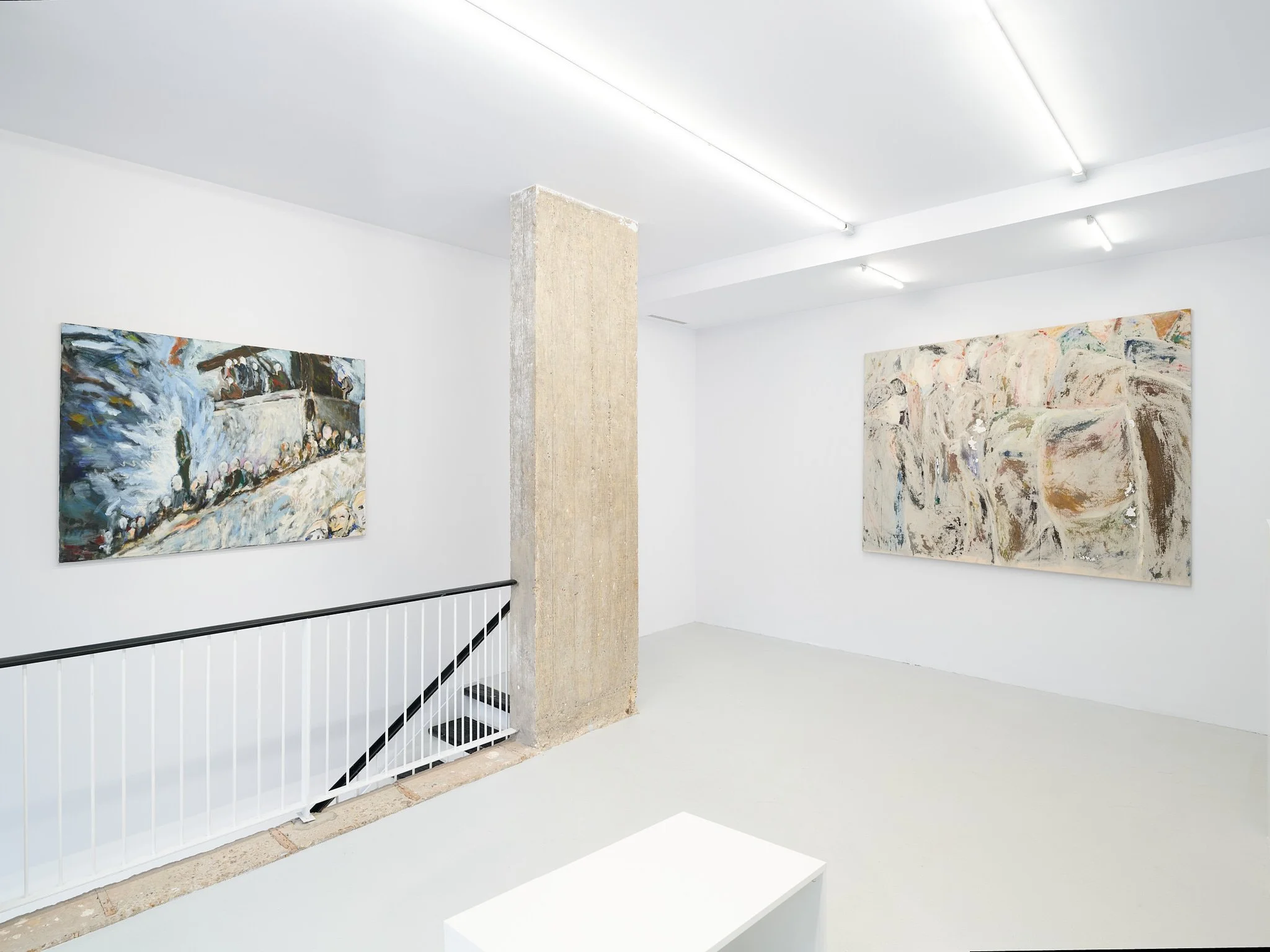
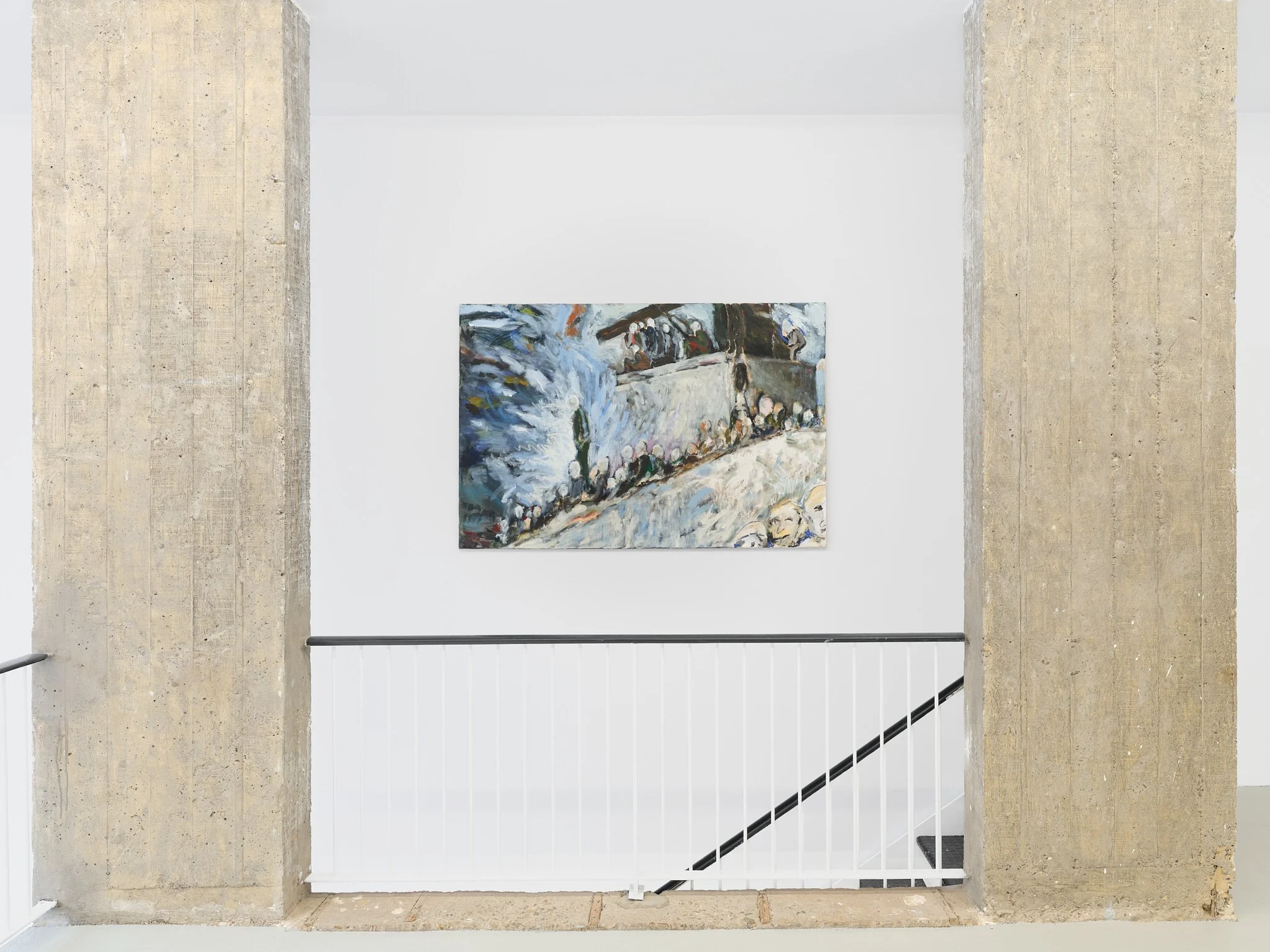
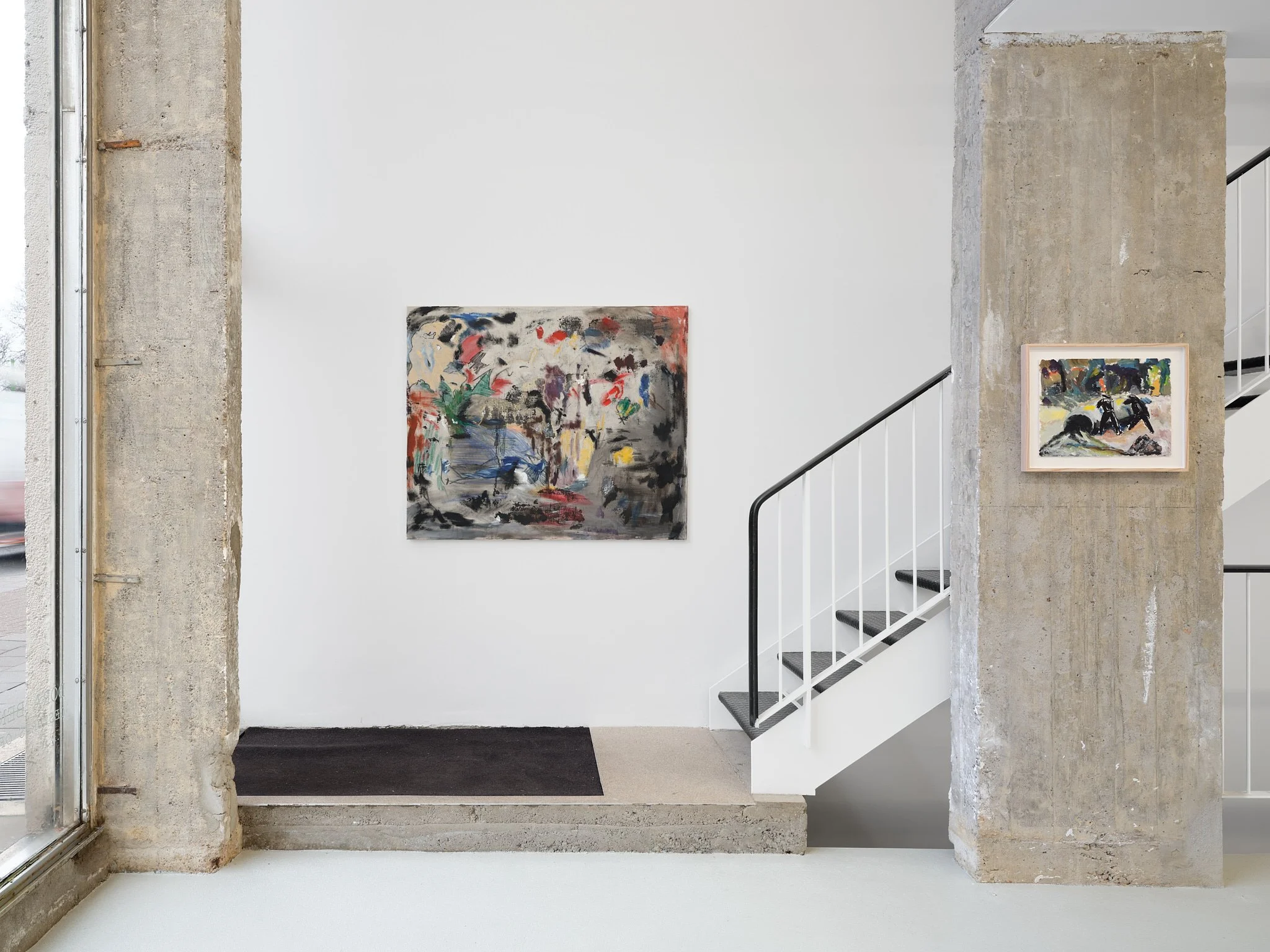
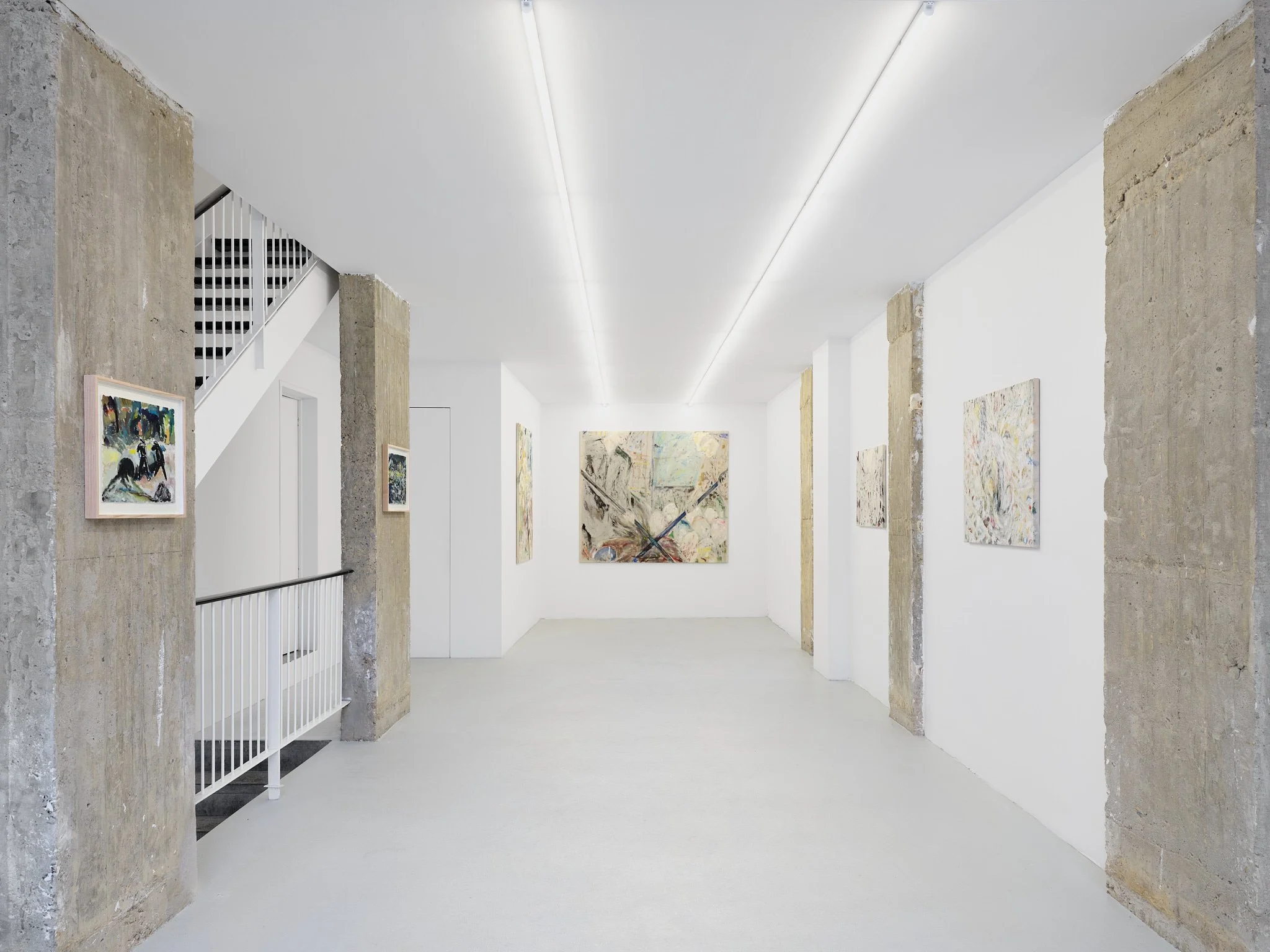
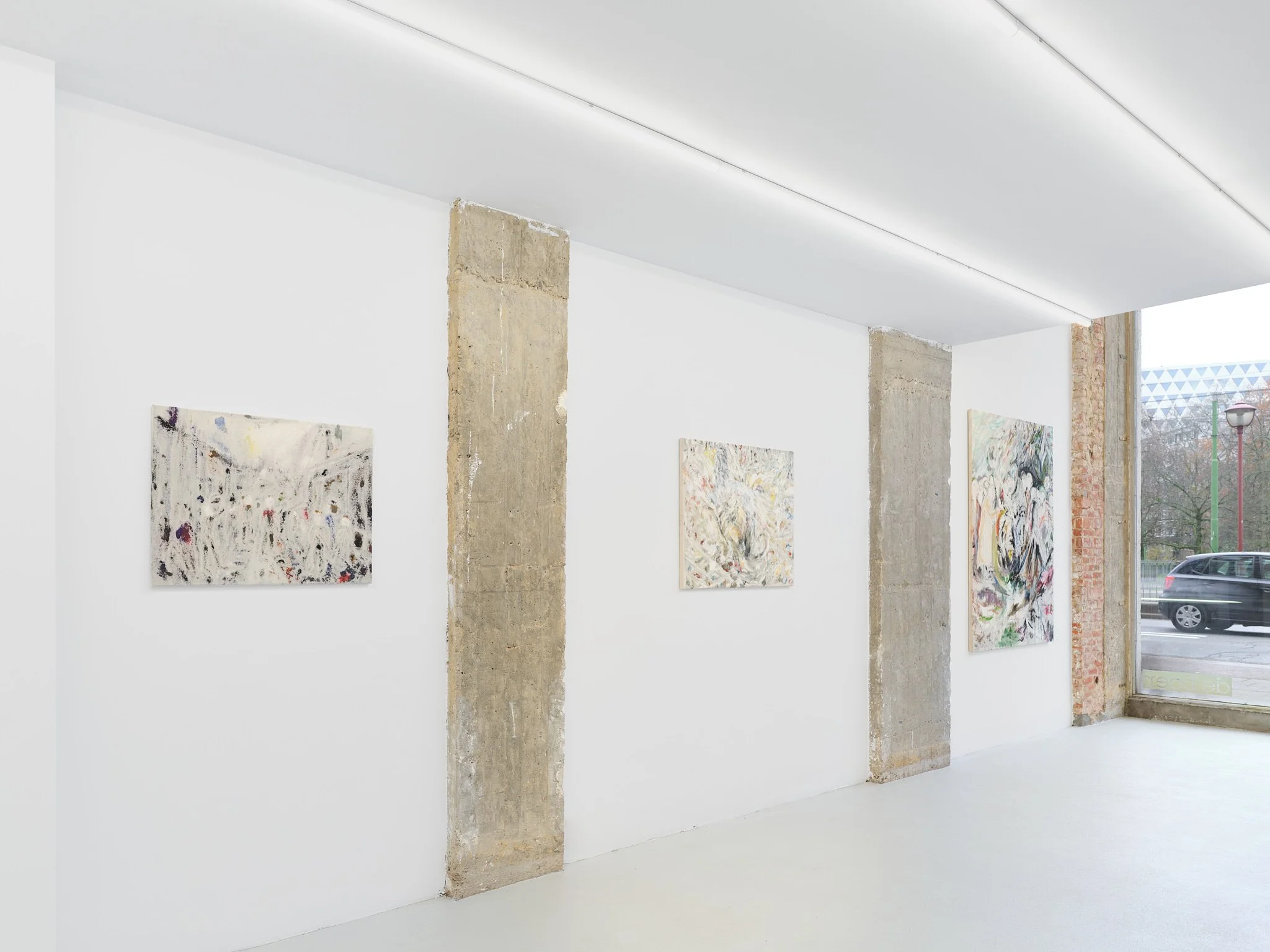
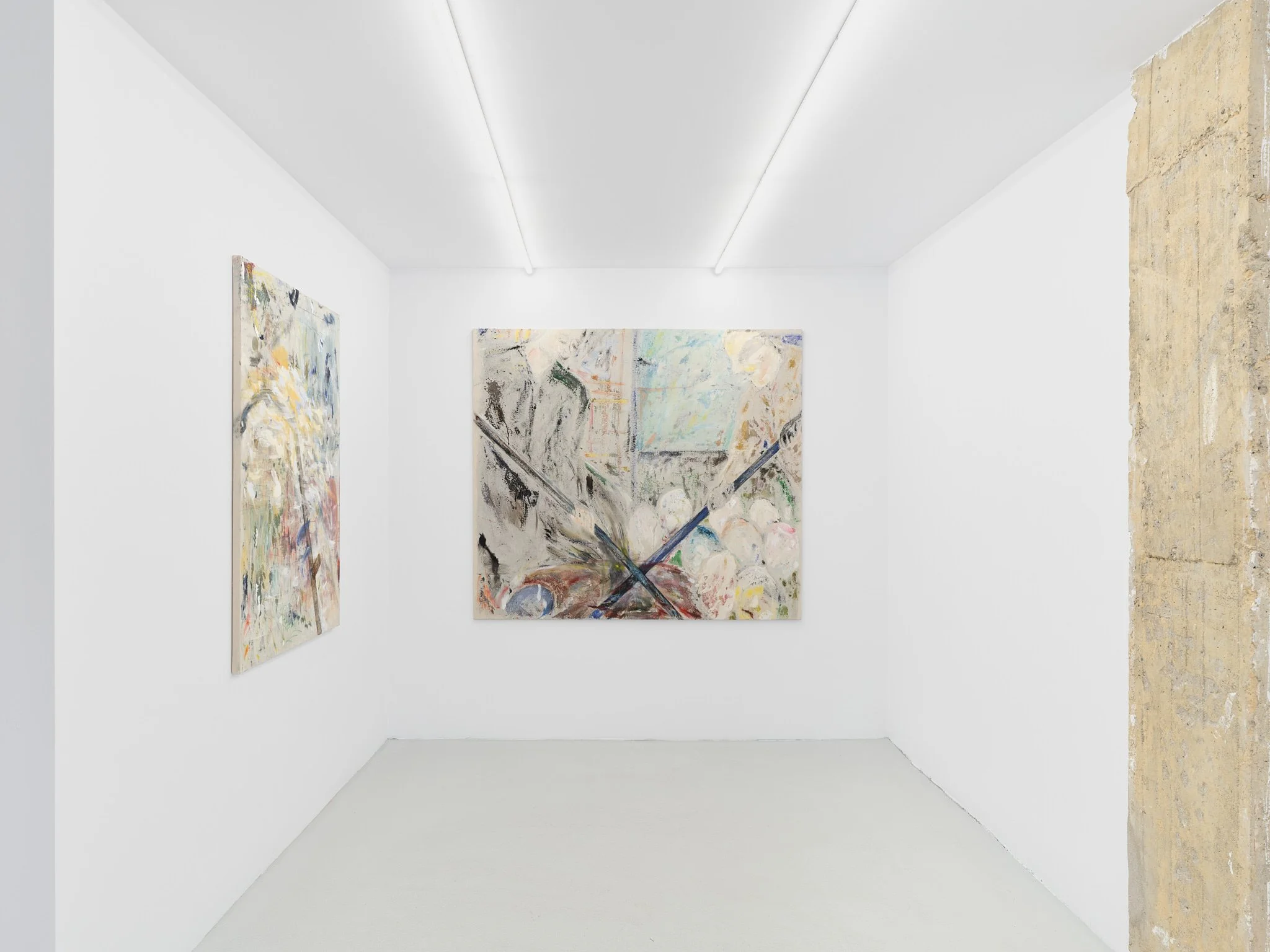
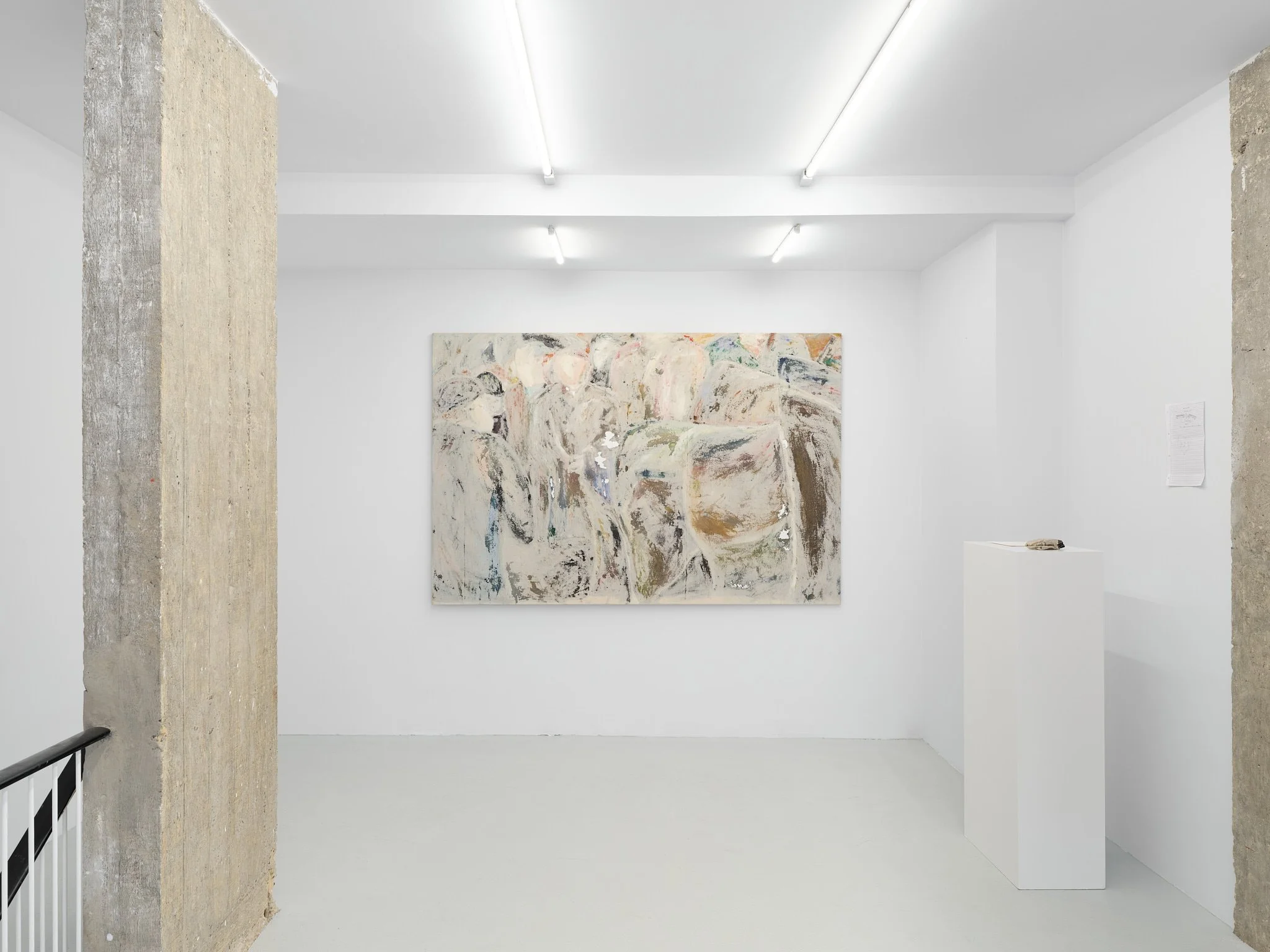
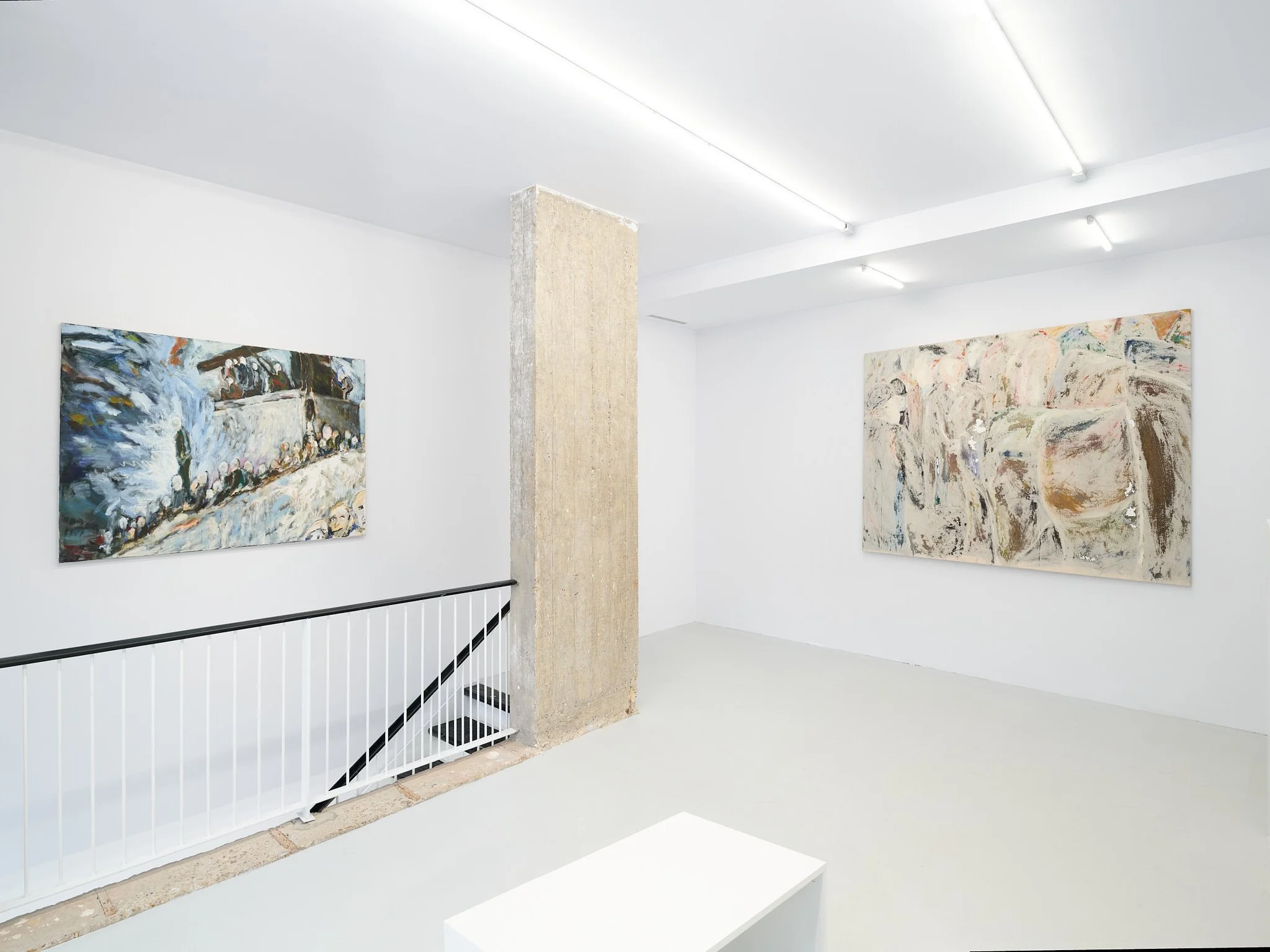
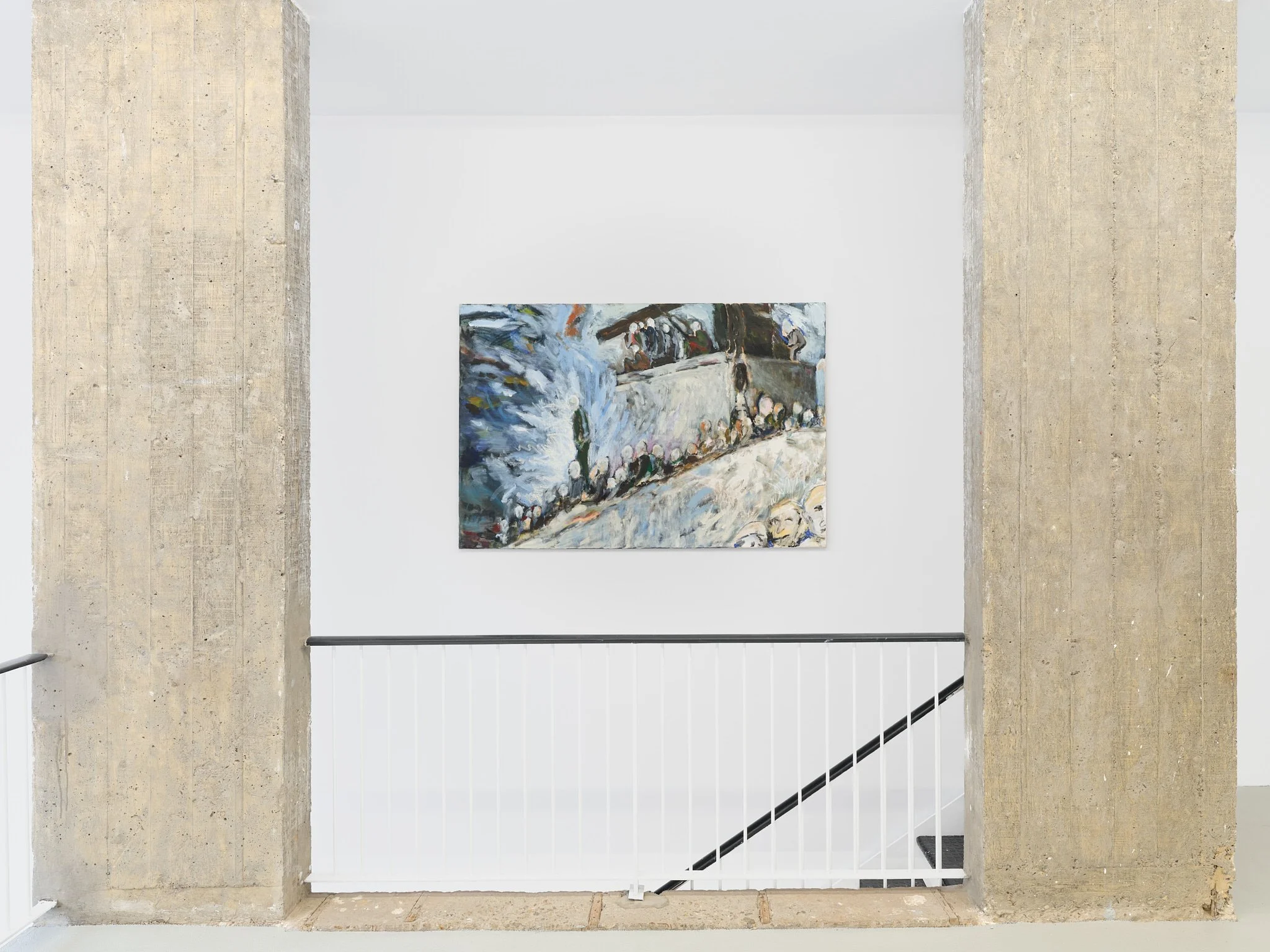
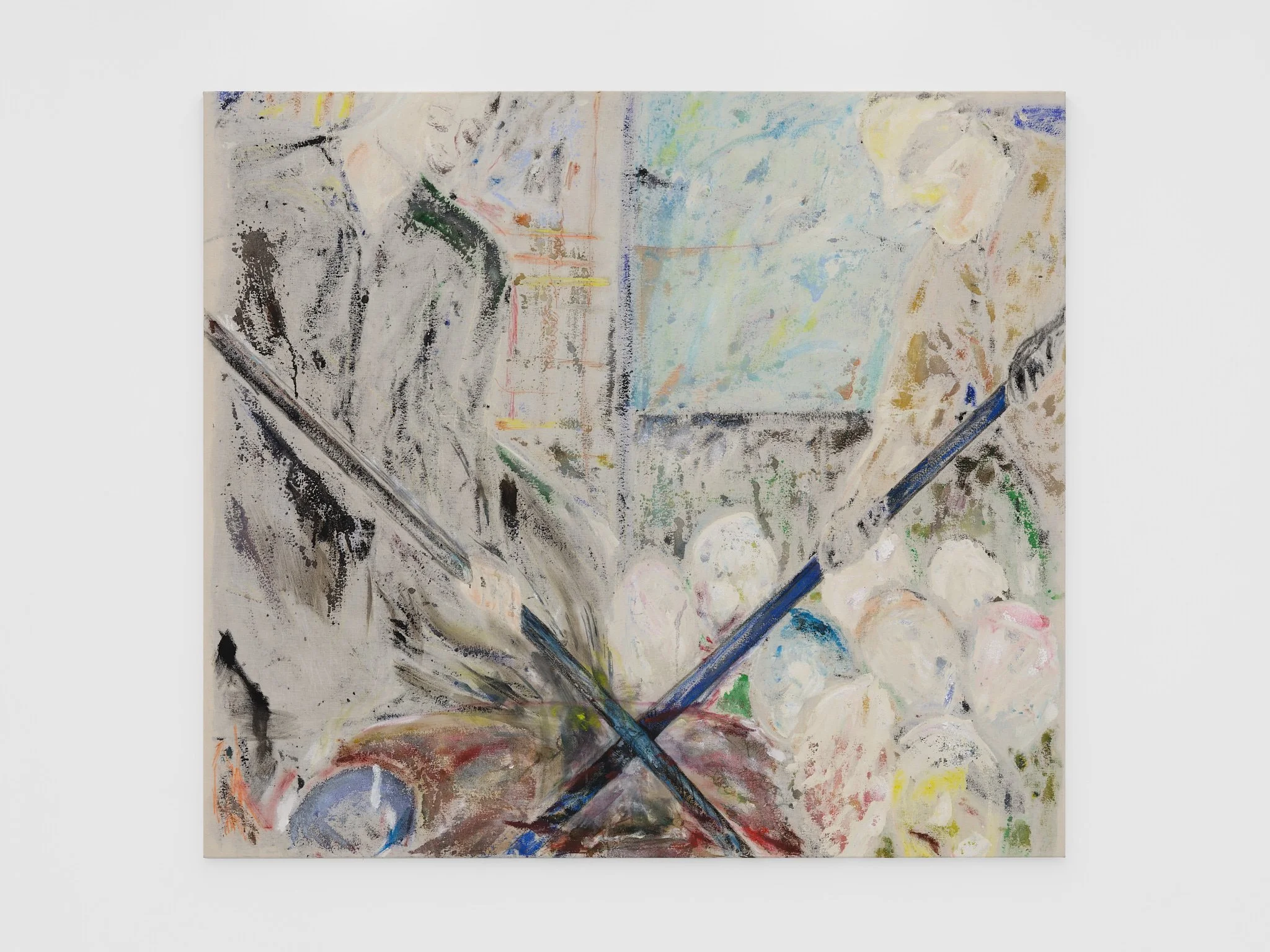
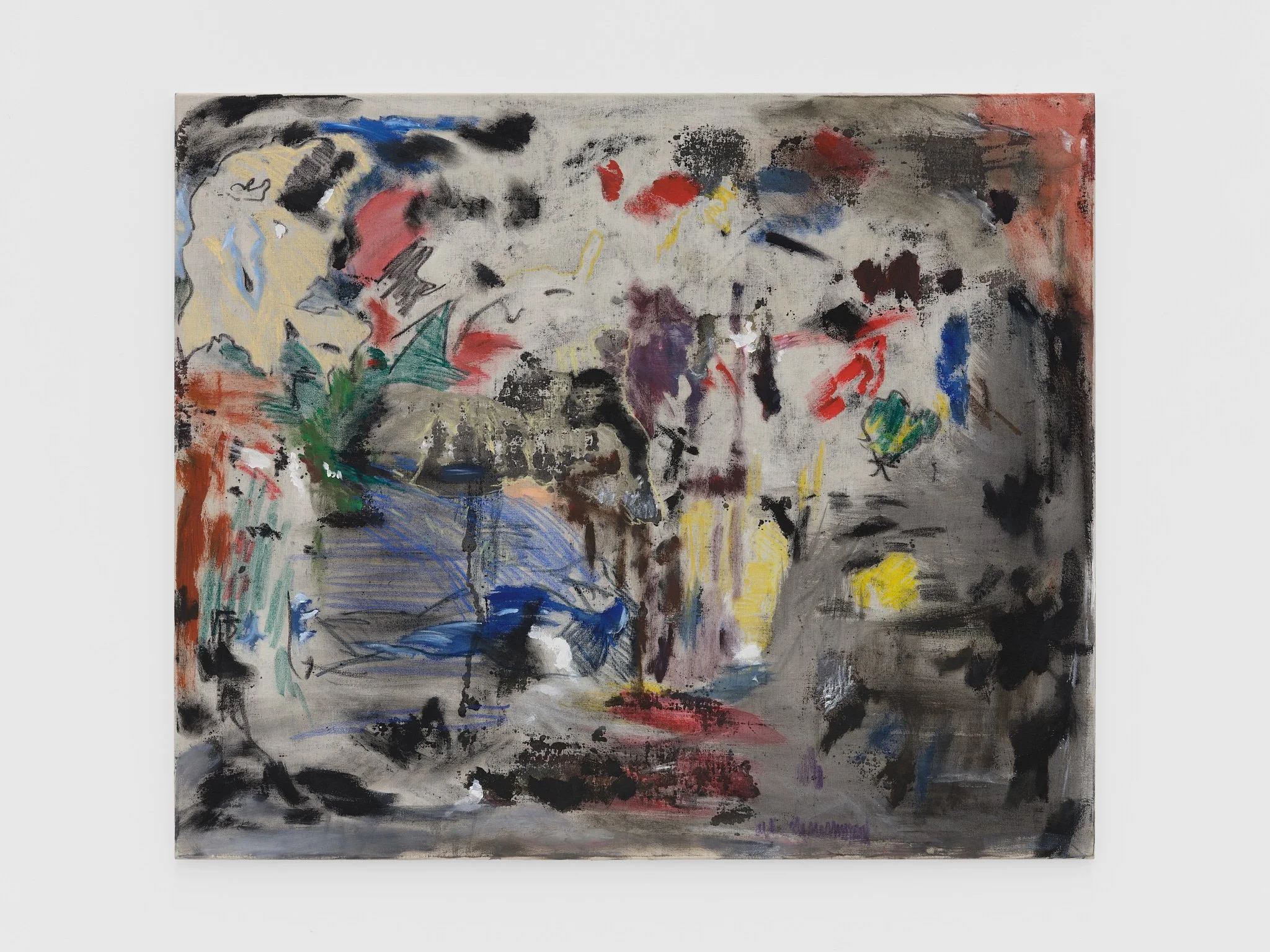
Across the gallery walls we encounter Benyo’s monumental works, revealing permeable brushstrokes through the fabric, as scenes shift between visually soft and harsh. The canvases portray a spectrum of different scenes through an abstract sensibility: crowds in resistance, pivotal historical moments, as well as mundane streetscapes. The works draw on vast materials the artist has gathered over time, including online photographic footage, oral histories, and archival records. Among these are reports from the Hungarian Archive of State Security Service, documenting the thorough surveillance of her grandfather. As an accumulator, she gathers these elements within her work, presenting them through a personal interpretation or, rather, reconstruction. In doing so, she remains acutely aware of the personal gaze she brings to them, and recognizes the multiple ways visitors may re-read them. By presenting only the backs of the canvases as a gesture of censorship, the artist offers a fragmented perception of reality, hinting at how histories are selectively passed down over time. As such, she prompts both herself and the viewer to explore, investigate and question them critically.
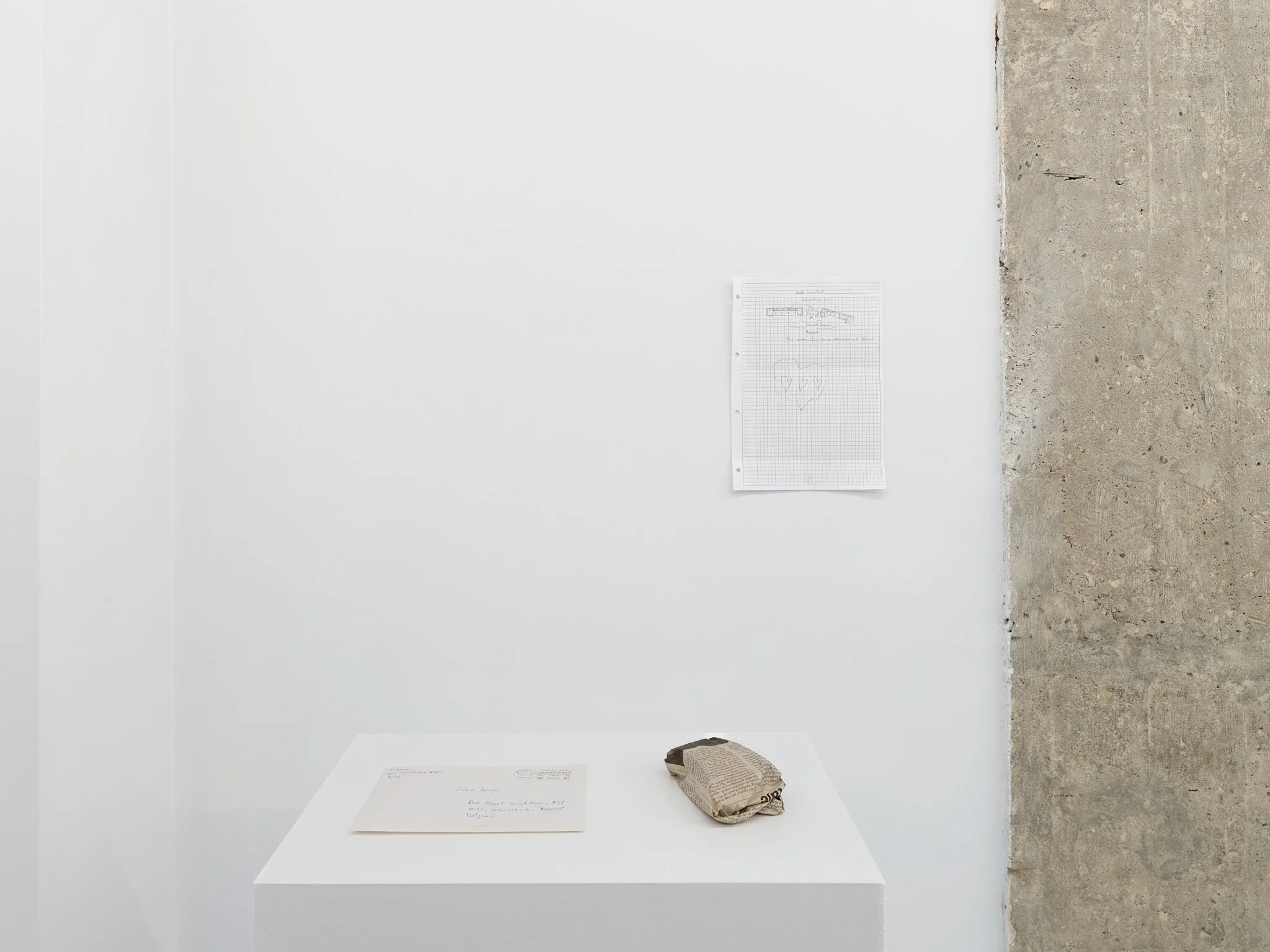
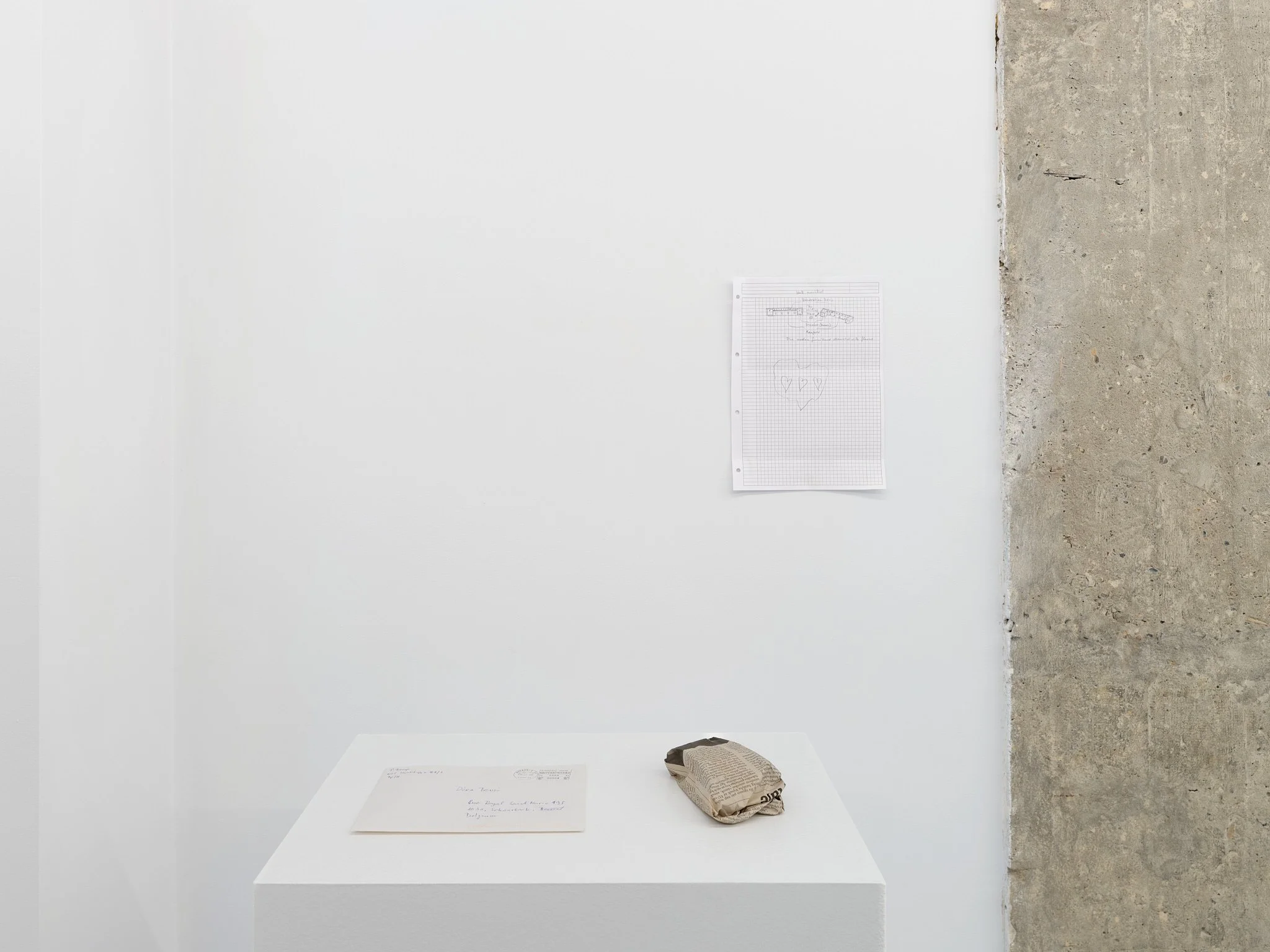
On the first floor, Benyó dedicated room for deeper understanding and contextualization of the works experienced earlier. At its center is the aforementioned video work Hogyan mutatnád meg – Afázia (How Would You Show – Aphasia), featuring her grandmother, who unknowingly shaped Benyó’s work by nourishing her interest in Hungary’s dictatorial history as well as the impact it carried on their personal, familial relationships. In that same intimate space, the sculpture Ahogyan emlékszem (As I remember) indicates a new direction in the artist’s practice. Enveloped in a Hungarian newspaper, it replicates a fragment of bronze passed down through her family. It once formed part of the Stalin statue that was torn down by demonstrators during the Hungarian Revolution of 1956, an act in which her grandfather was allegedly involved.
On the opening night of Gestures of Ability, Benyó activates this delicate sculpture through a performance, confronting how a piece of bronze emblematic of the revolution found its way into the artist’s family home, yet remained unspoken. Present but unacknowledged, the object occupies an intermediate space, guiding Dóra Benyó today as she navigates the complexities of her motherland’s past. In her devoted search for proximity toward her origins and familial heritage, the stories she wishes to articulate refuse to be whole; what cannot be voiced, at last, comes to inhabit her work.
About Dóra Benyó
Dóra Benyó (b.1989, Hungary) lives and works between Brussels and The Hague. Her body of work, spanning painting, video, and performance, is deeply rooted in both personal and political narratives, exploring her connection to her motherland, Hungary, and its dictatorial past. Benyó has had solo exhibitions at de boer, Antwerp, BE; The Wunderwall at Gallery Sofie van de Velde, Antwerp, BE; SECONDroom, Antwerp, BE; The Platform, Antwerp, BE; uqbar projectspace, Berlin, DE; AQB Institute, Budapest, HY; 76,4, Brussels, BE. Group exhibitions include those at de boer, Los Angeles & Antwerp, Klauzál 6 projekt space, Budapest, HU; Art Au Centre, Liege, BE; Ada Ventura, Brussels, BE; Red Herring Salon, Antwerp, BE; Gallery Tegenboschvanvreden, Amsterdam, NL; RAAR, Rotterdam, NL, many others. Benyó’s work has been published in many publications in Belgium, the Netherlands, and Hungary. She recently completed the Artist Residency at Berlin Alexanderplatz and was supported by the Mondrian Fund. She has also completed residencies in Budapest, Skagstrond, Amsterdam, and Tsarino. Benyo received an MFA from Sint Lukas, LUCA School of the Arts, Brussels, BE; a BFA from The Royal Academy of Fine Arts, The Hague, NL, and studied at the Hungarian University of Fine Arts, Budapest, HU.
Selected Works
Dóra Benyó
Searching For My Grandfather - Lelki Vágás (Inner Cut), 2021
oil and acrylic pastels on canvas
66⅞ x 70⅞ in. / 170.00 x 180.00 cm
Dóra Benyó
Hidden Signs, 2020
oil and acrylic on canvas
39⅜ x 47¼ in. / 100.00 x 120.00 cm
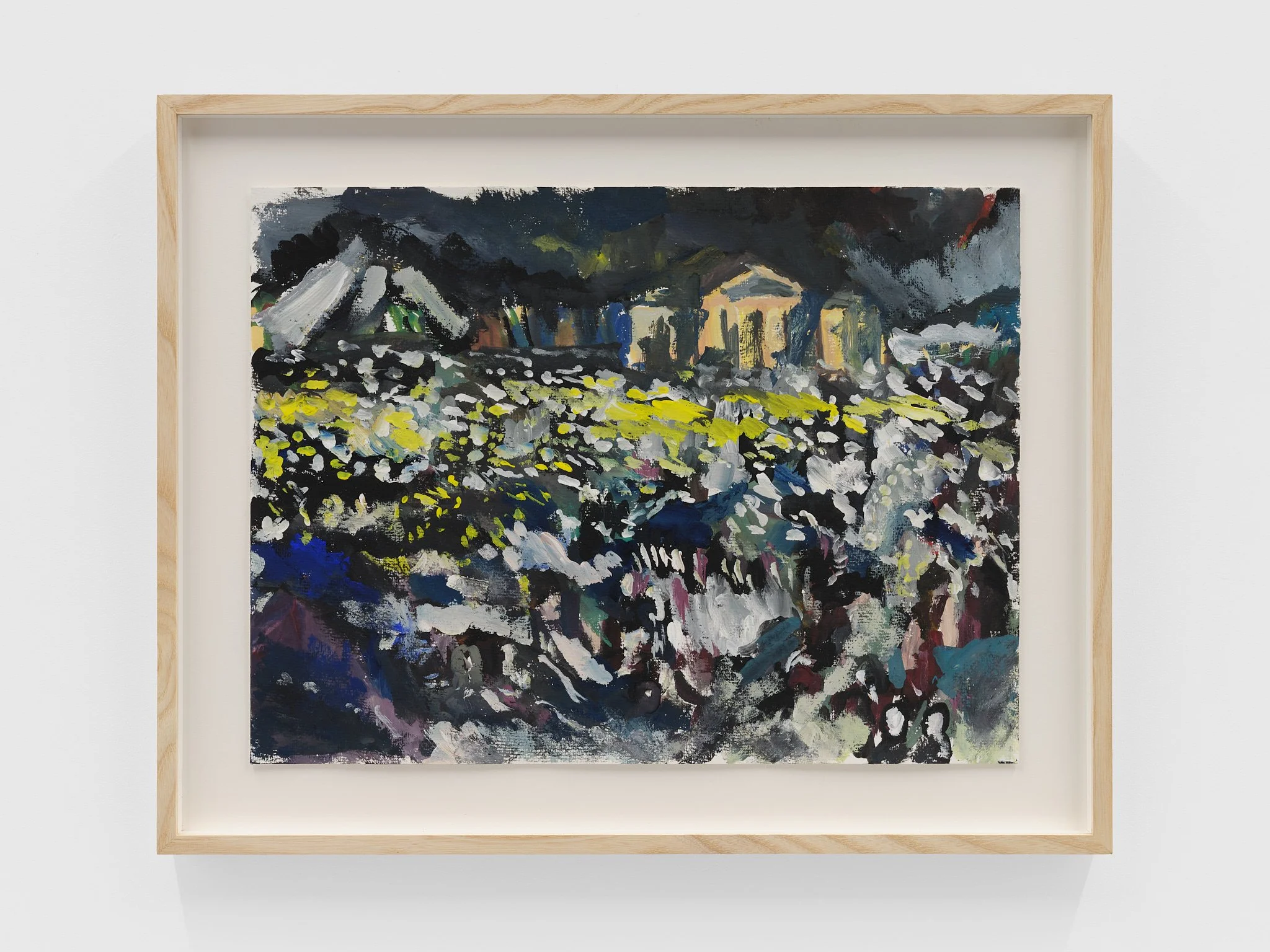
Dóra Benyó
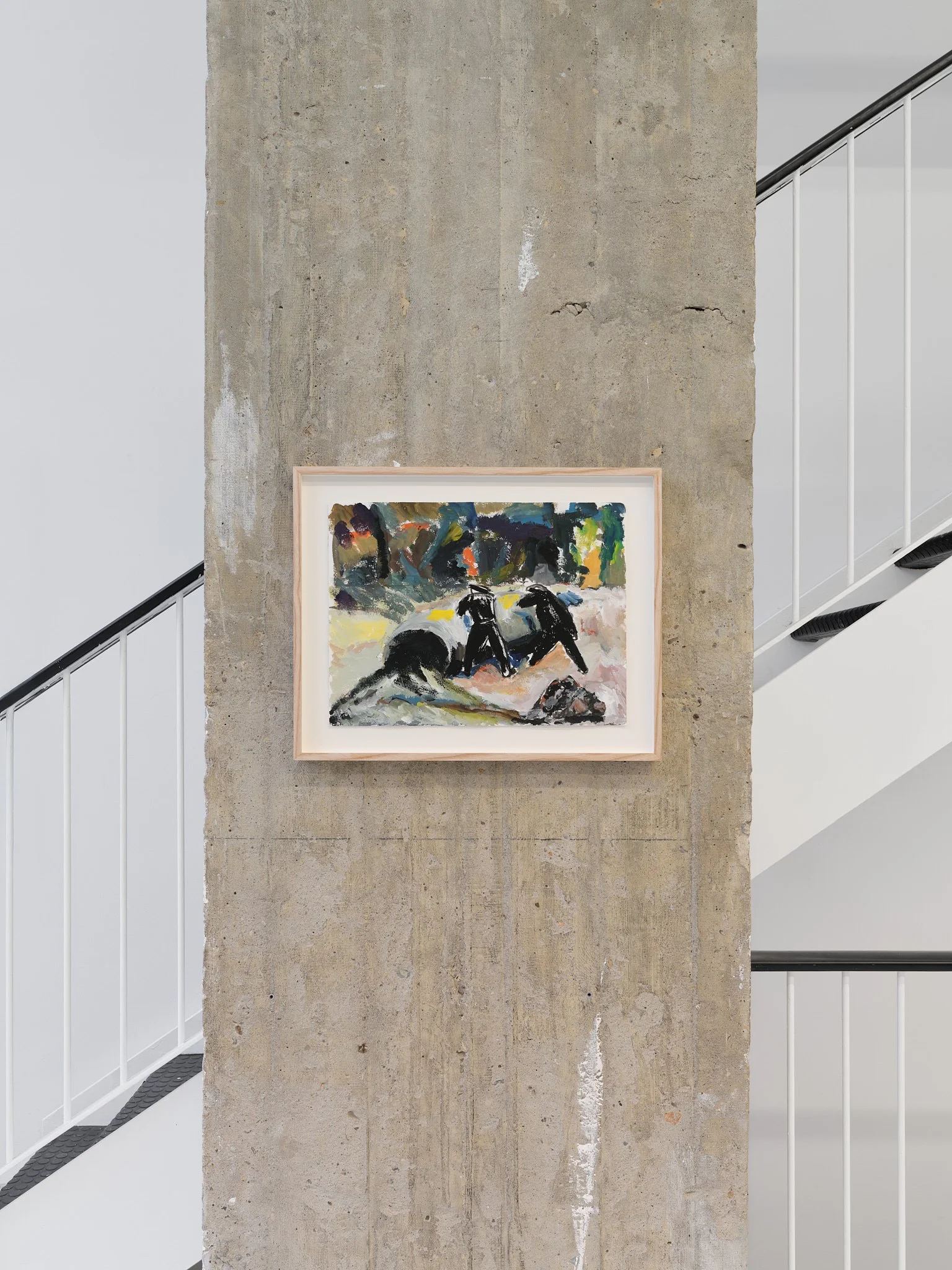
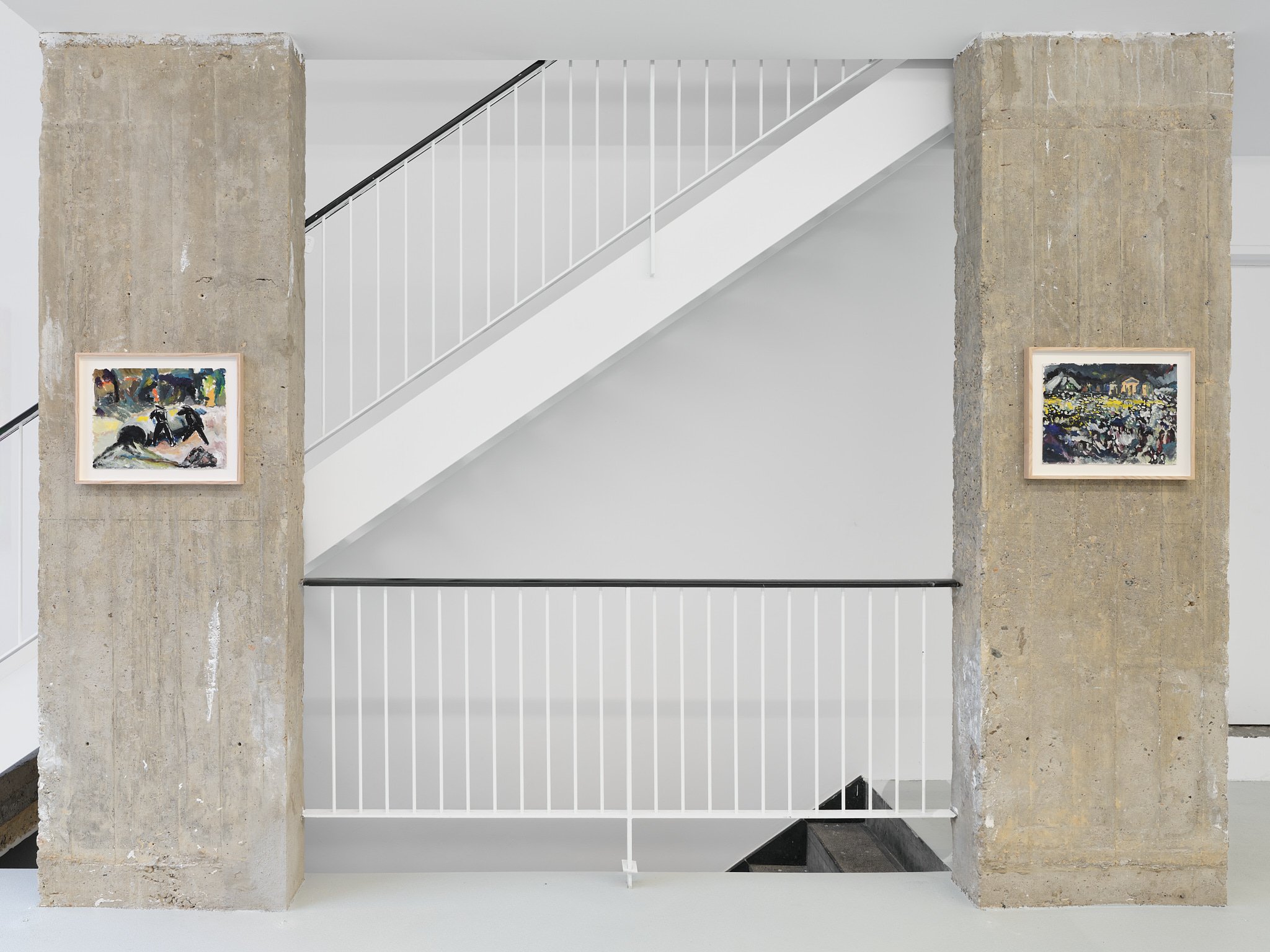
Hősök terén (At Heroes’ Square), 2024
gouache and egg tempera on paper
11¾ x 15¾ in. / 30.00 x 40.00 cm
15⅜ x 19¼ in. (framed) / 39.00 x 49.00 cm (framed)
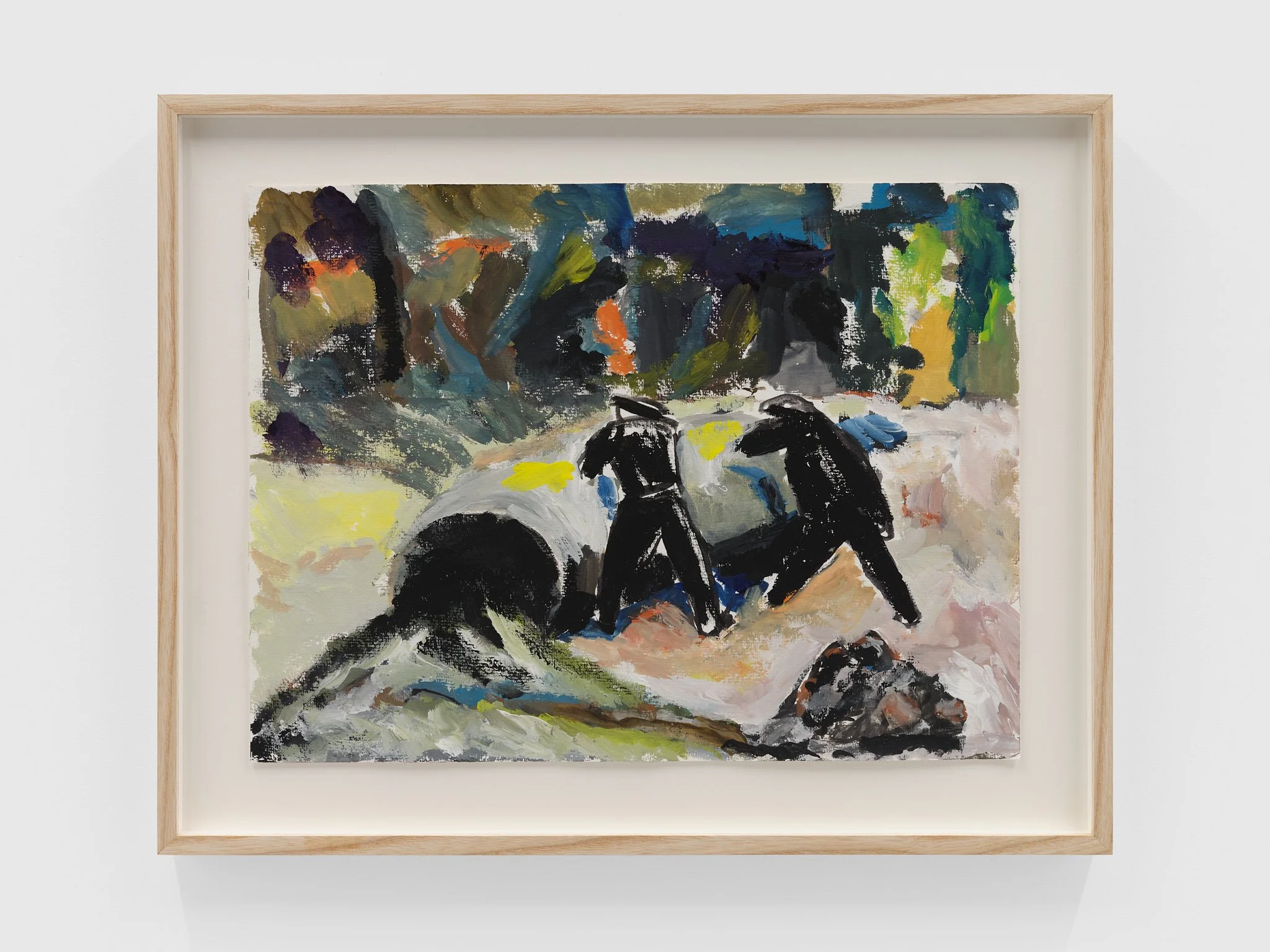
Dóra Benyó
Hasonló események (Similar events), 2024
gouache and egg tempera on paper
11¾ x 15¾ in. / 30.00 x 40.00 cm
15⅜ x 19¼ in. (framed) / 39.00 x 49.00 cm (framed)
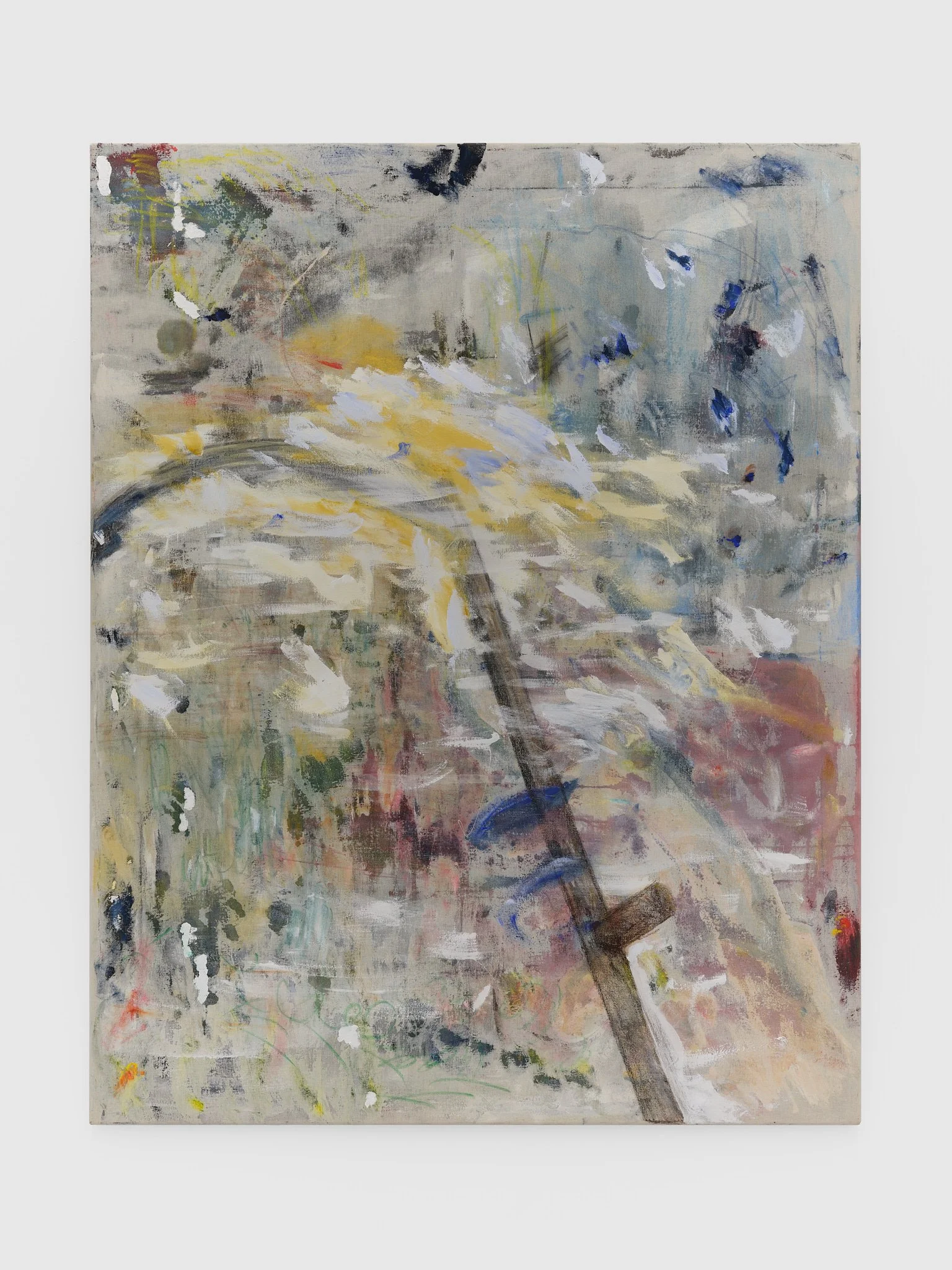
Dóra Benyó
Mező (Meadow), 2020
oil and acrylic on canvas
59 x 39⅜ in. / 150.00 x 100.00 cm
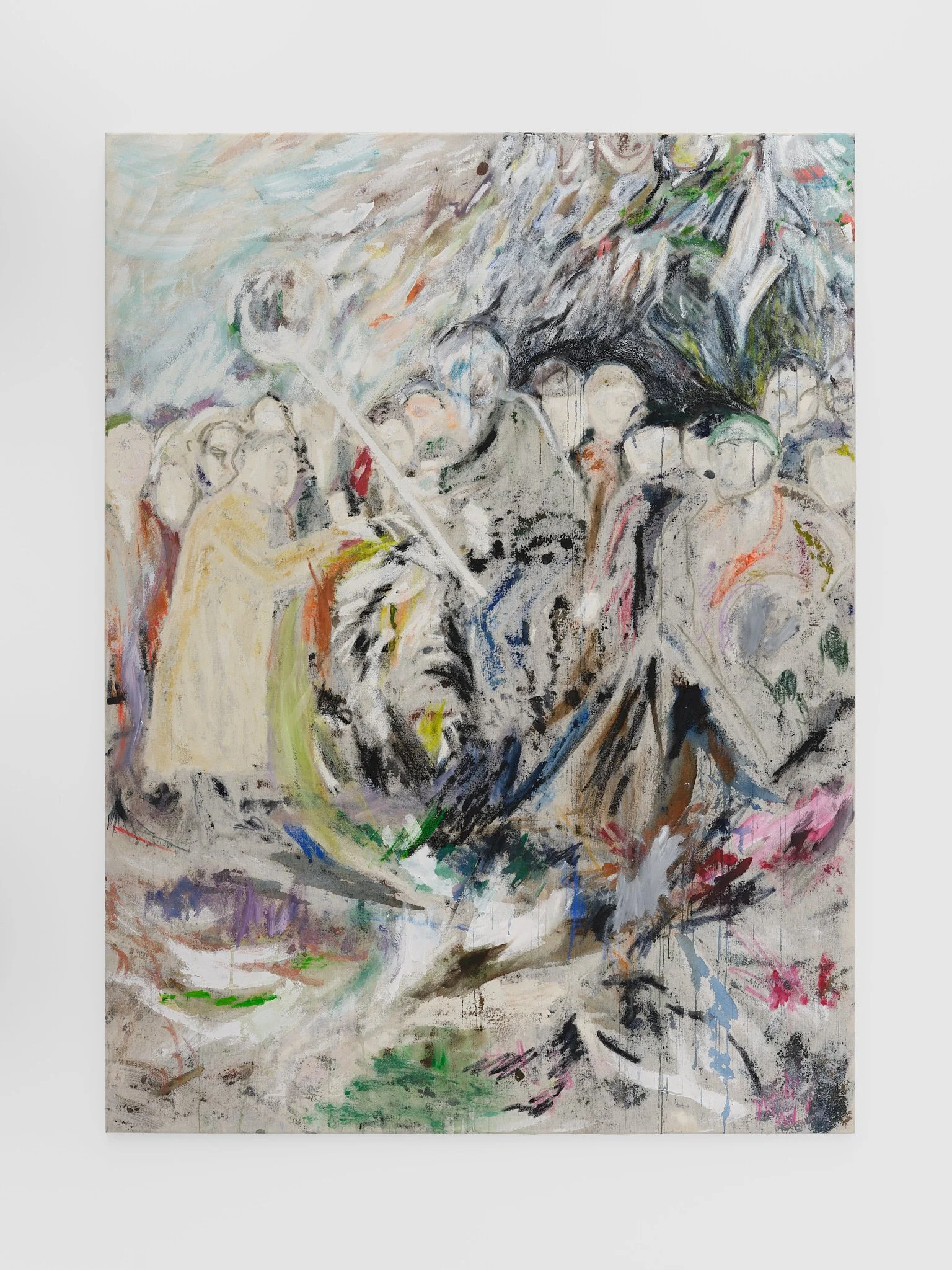
Dóra Benyó
Searching For My Grandfather - Ott a kék, a remény (There is the blue, the hope), 2024
oil and acrylic on canvas
63 x 47¼ in. / 160.00 x 120.00 cm
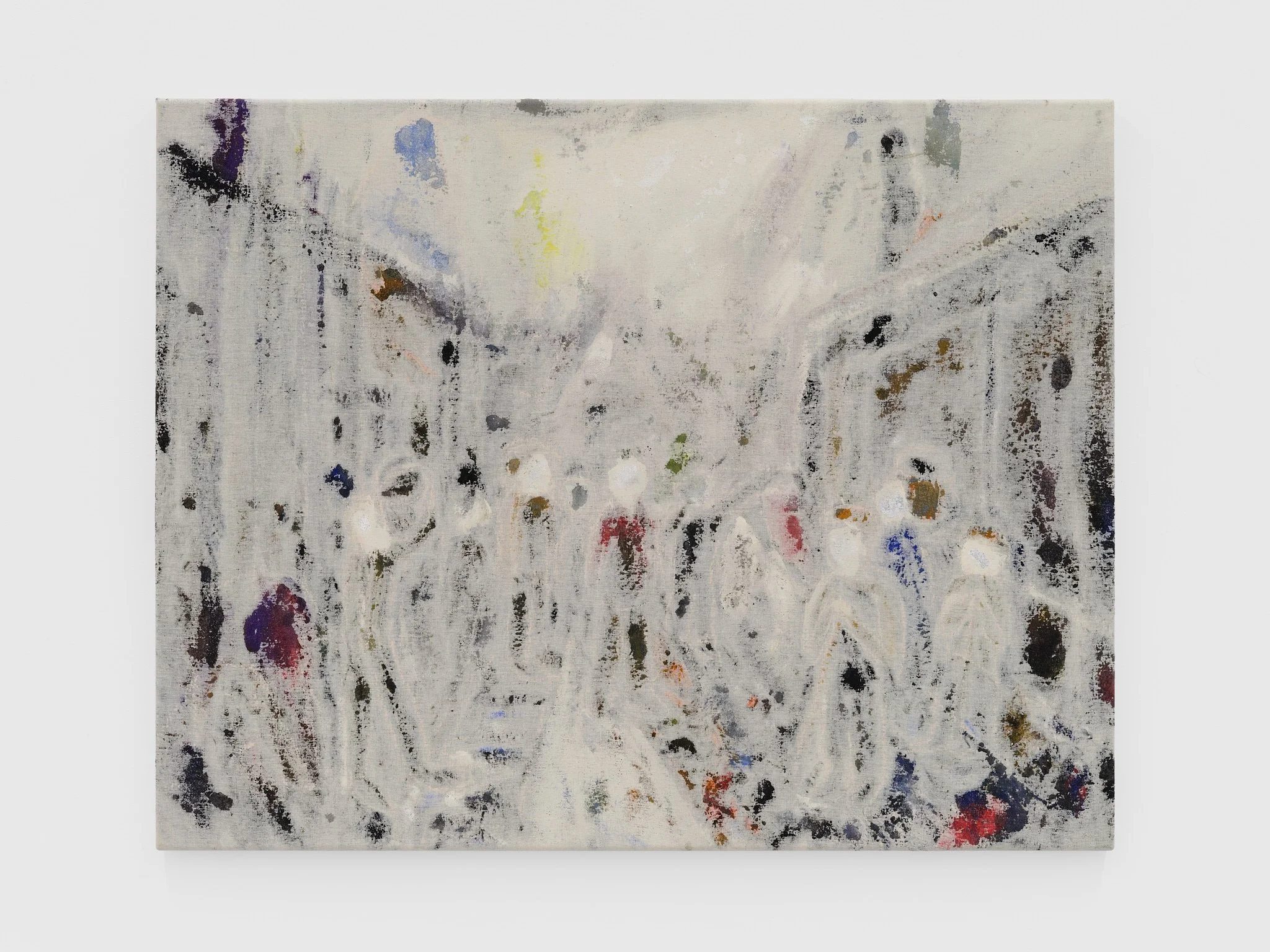
Dóra Benyó
Pihenő Ásók (Resting shovels), 2025
oil and acrylic on canvas
21⅝ x 27½ in. / 55.00 x 70.00 cm
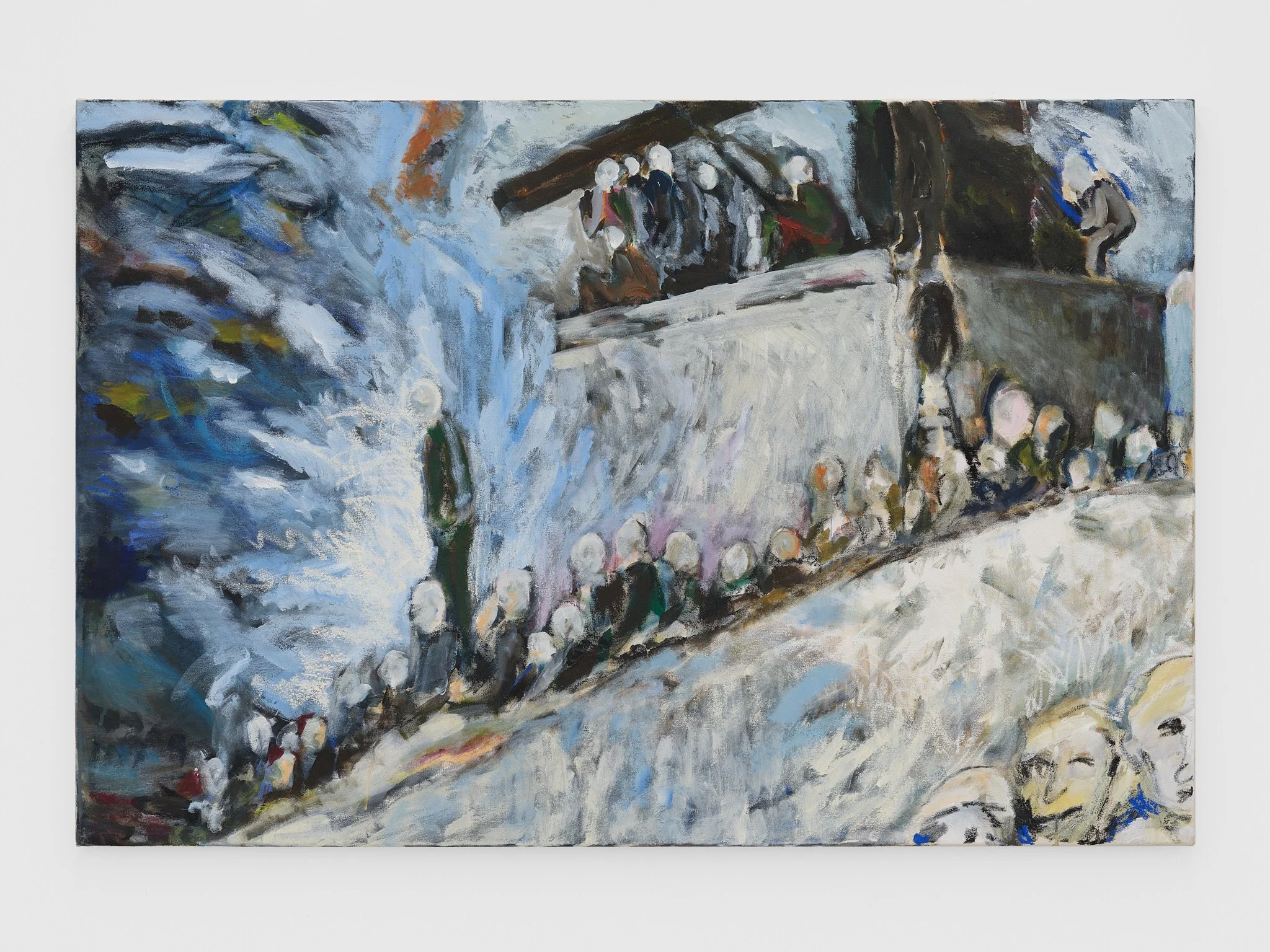
Dóra Benyó
Csizma tér (Bootsquare), 2023
oil and acrylic on canvas
39⅜ x 59 in. / 100.00 x 150.00 cm
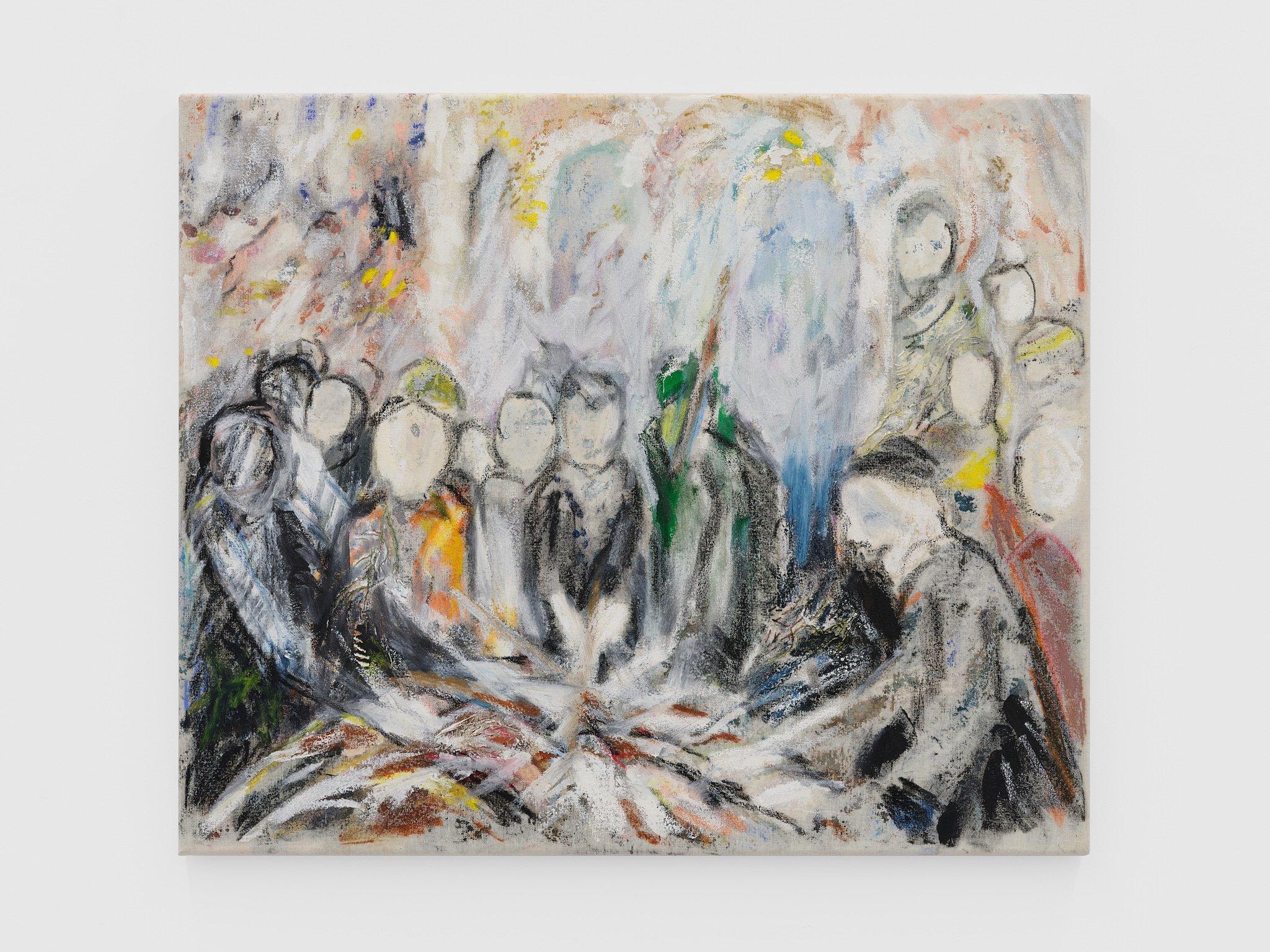
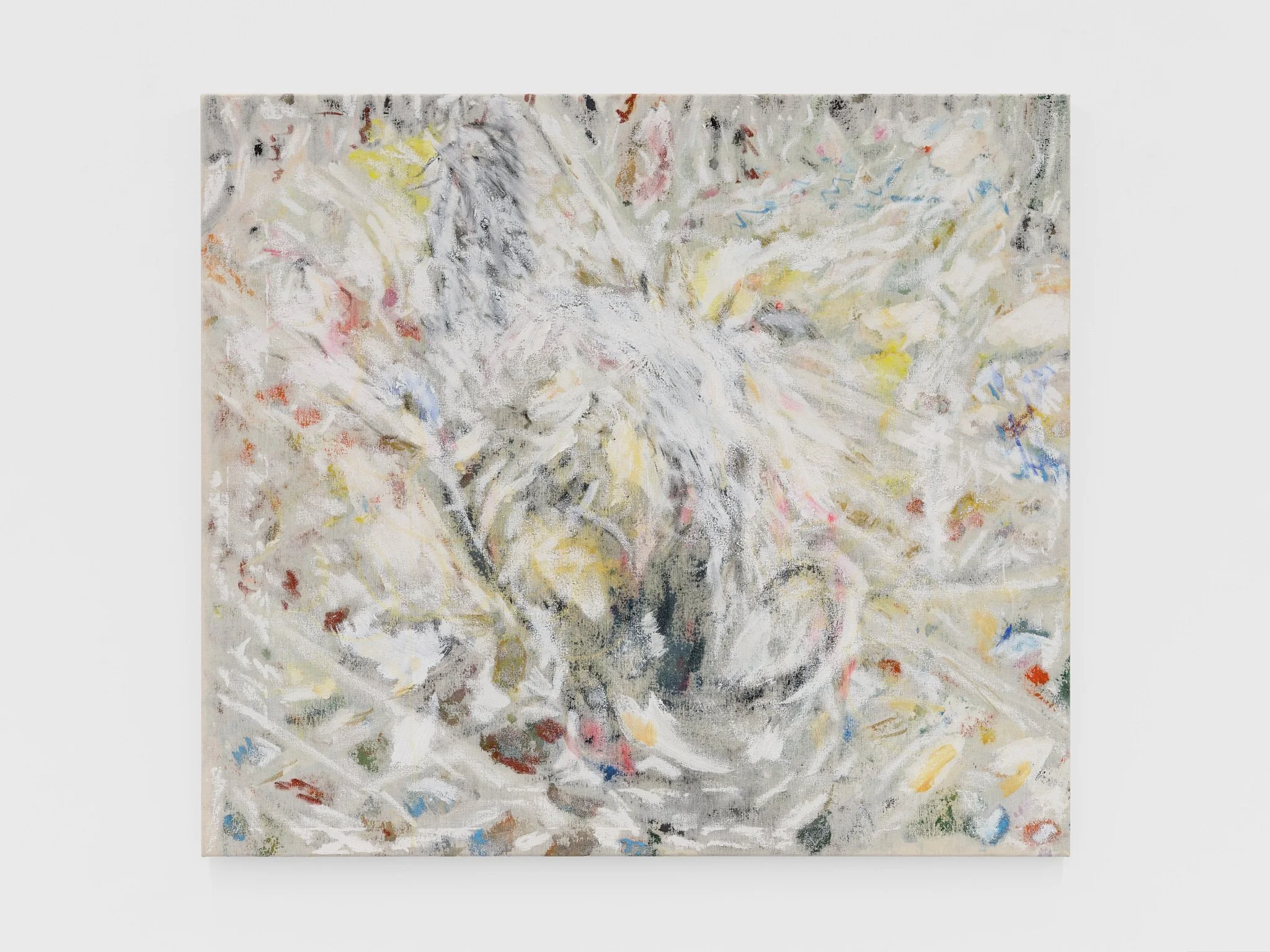
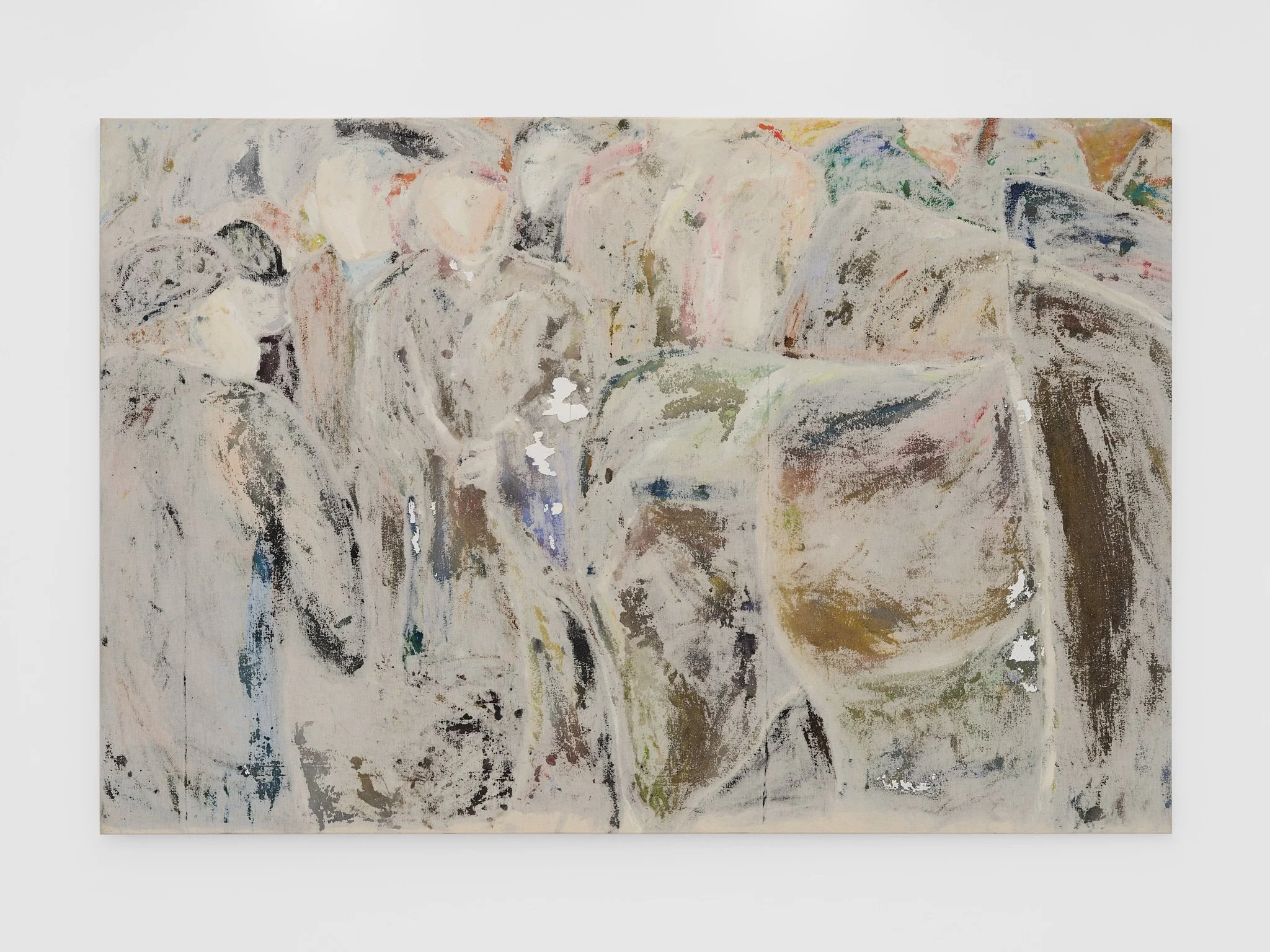
Dóra Benyó
Searching For My Grandfather - negatív (negative), 2021
oil, acrylic and wallfiller on canvas
49¼ x 100⅜ in. / 125.00 x 255.00 cm